Friday, July 28, 2006

New Book - In Defense of Animals

Peter Singer (ed.)
In Defense of Animals: the second wave
Blackwell Publishing, 2006, 179.3 IND

The
RSA Lecture Program for autumn 2006 kicks off with a lecture from Peter Singer, Professor of Bioethics at Princeton University. Singer, who edits this pro-animal rights text, is a leading thinker in the field and has been described as 'the world's most controversial ethicist'. He has published books on the ethics of subjects as diverse as food production, allocation of health care resources, globalization, euthanasia, and George W. Bush.

Utilitarian.net contains an entire catalogue of book excerpts, articles and reviews by Peter Singer, including an interview in early 2006 in which Singer states clearly his views on the ethics of animal rights.

Read an
Independent Online Review of In Defense of Animals.

Monday, July 17, 2006

RSA Lecture - Who owns the world?


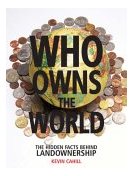
Journalist, author and RSA fellow Kevin Cahill presented an RSA lecture in June 2006 entitled "Who owns the world?" The lecture precedes the publication of his forthcoming book of the same name (published in November 2006), and furthered his argument for land reform as a vital means of achieving more equal and economically prosperous societies.


Who owns the world? is highly significant as the first ever attempt to survey every piece of land on the planet. In a typically provocative lecture, Cahill made reference to how little attention has been paid to startlingly accurate primary sources such as the
Doomsday book in attempts to understand and research into land ownership in Britain. He also pointed to the inefficiency of land usage caused by the current system of land ownership, criticized the Campaign to Protect Rural England for presenting a false picture of the threat posed by planning and development to rural areas of Britain, and argued that land reform is key in the task of alleviating poverty in the developing world.

The Caledonia Centre for Rural development has an extensive
on-line information base for issues around land reform and ownership which contains, among other things, articles on UK agriculture subsidies, community based land reform, and urban land reform.

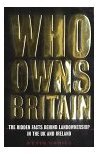
Kevin Cahill's book Who owns Britain? is available to borrow from the RSA Fellow's Library. Read a
New Statesman review of Who owns Britain?.

Friday, July 14, 2006

Government Report - Tackling homelessness

The issue of "homelessness" is directly related to a number of the RSA's manifesto Challenges . The forthcoming issue of the RSA Journal will contain an article on homelessness written by John Bird (pictured left), entrepreneur and co-creator of popular magazine "The Big Issue". The Big Issue is "the most successful social business in the UK", combining hard-hitting current affairs journalism with a social enterprise that provides homeless street vendors with the opportunity to work themselves out of poverty.

This contribution to the RSA Journal is a continuation of Bird's significant campaigning on issues of homelessness. Bird has been highly vocal in his criticisms of the way the British "homeless industry" has focused on treating the short-term symptoms rather than long term causes of homelessness. A
Guardian article summarizing a talk Bird gave to a Conservative Party organized summit on homelessness in 2005 provides an example of his message. In his forthcoming article for the RSA Journal, Bird turns his attention to the role of government in tackling homelessness, arguing that government provision for homeless people robs them of the opportunity to create meaning and direction in their own lives.

The Government's most recent report on homelessness is available to download:
The Office of the Deputy Prime Minister: Tackling homelessness - thirteenth report of session 2005 - 06.

Friday, June 23, 2006

Al Gore - RSA lecture / An Inconvenient truth


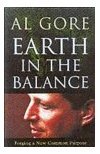
Former US Vice-President Al Gore presented a lecture entitled "Earth in the Balance Sheet" to a full house in the Great Room of the RSA on June 21st. His influential book Earth in the balance is available to borrow from the RSA Fellows' Library, and has now been followed up with a new film and book - An Inconvenient truth (book published in the UK September 06 - reserve a copy now from the RSA Fellows' Library).

The film has had a high impact pushing the environment to the forefront of the US social and political agenda. The current unwillingness of the USA to ratify the Kyoto Protocol is seen by
many as a massive barrier to uniform action on climate change.

Trailer for
An Inconvenient truth ......


Gore proved to be both a charismatic and powerful speaker during his RSA performance, indulging in self mockery during his introduction in which he conceded that "yes, I was the next president of the United States", but also describing the need to tackle climate change as "a moral imperative" and speaking with great passion when comparing the kind of united action required to effectively reduce carbon emissions with the bravery and determination displayed by the Allies in their commitment to overthrowing fascism during the Second World War. A podcast of the lecture is available
here.

However support for Al Gore has not been universal. The
Competitive Enterprise Institute, a lobbying group that stresses limited government regulation and a free-market approach to environmental issues, has created two "Pro-Carbon" television advertisements aimed at countering the effect of what they call the "alarmist" media presentation of worldwide climate change. And before you ask, they are for real......


However, Gore's film has also attracted some more measured criticism. In a
recent piece in The Guardian newspaper, John Pilger criticized Gore's role as an environmentalist by pointing out that when Gore was Vice-President under the Clinton administration, the US had an even worse record on carbon emissions than at present.

Such a high profile speaker clearly illustrates the high quality of the
RSA lecture program and it's commitment to stimulating discussion and debate of the most crucial issues of the day. Mr Gore's presence at the RSA received significant media attention, including a feature on Radio 4's The Today Program.

A further RSA lecture relating to environmentalism is planned for September (not yet announced). It is due to feature Bjorn Lomborg and be broadcast on BBC Radio 4.
Lomborg, author of The Skeptical environmentalist and Global crises, global solutions (a 2nd edition to be published in July renamed How to Spend $50 Billion to Make the World a Better Place ), is renowned for his controversial views and opposition to the majority of the environmental lobby movement.

Thursday, June 08, 2006

New Book - On the Corinthian spirit.

D. J. Taylor
On the Corinthian spirit: the decline of amateurism in sport
Yellow Jersey, 2006, 306.483 TAY


England will be represented by a team of millionaire professional footballers at the 2006 World Cup this summer, but is the increasingly high profile and big money nature of sport good for British society? The subjects of On the Corinthian spirit are 'Charlie Bam', the Corinthian defender who once played with a broken leg, the boys' school story hero Strickland of the Sixth, and the 14th Norwich Cub Scout XI. In this nostalgic book D.J. Taylor provides a fond account of many amateur sports heroes, as well as describing a changing moral universe with profound consequences both for sport and the world beyond it. Tackling a question much pondered over in recent years (including within our own RSA Journal), On the Corinthian spirit seeks to uncover what has been lost and what gained by the advances of professionalism in sport?

Read a review of On the Corinthian spirit by Lincoln Allison, author of Amateurism in sport: an analysis and a defense.

Tuesday, June 06, 2006

Festival of innovative moving image - onedotzero_10.

Onedotzero is a state of the art annual digital creativity festival and digital production company. Now in it's tenth year, the festival Onedotzero_10 is currently running at the Institute of Contemporary Arts(ICA) in London until June 11 2006, and involves screenings, features, exhibitions, live av performances, club nights, presentations and panel discussions from internationally acclaimed artists and creatives.

A selection of short films on show at the festival are available to view online through the BBC Film Network. For more background, take a look at an interview with Shane Walter director of Onedotzero in Digit Magazine. The films featured in the festival lineup are full of substance as well as style - the schedule includes a cartoon look at stem cell research and young director Jes Benstock employs animation to examine the dark industry of tourism that has grown up around the Holocaust. Similarly, the Japanese programme features hi-tech horror Jinniku No Umarekawar [Rebirth Of Human Meat] using contemporary anime to ponder Oriental philosophy. So, rather than undermining the art of storytelling, Walter insists, "it's just about telling stories in a different way."

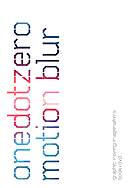
"Motion blur" the latest book and accompanying DVD publication from Onedotzero is available to borrow from the RSA library. It charts the rapid developement of the moving image over the last decade and features the work of numerous film makers and audio visual experts associated with the Onedotzero project,

For a quick taste, here's a link to the short advert version of Tim Hope's incredibly imaginative contribution, The Wolfman, which is also featured in detail (and full length) in another RSA Library book and DVD : Animation unlimited: innovative short films since 1940.

Shane RJ Walter and Matt Hanson.
Motion blur: onedotzero - graphic moving imagemakers.
Laurence King, 2005. 778.53 WAL

Liz faber and Helen Walters.
Animation unlimited: innovative short films since 1940.
Laurence King, 2006. 791.433 FAB

Available to borrow by RSA Fellows - contact the Library for details. Ask about our Freepost service.
Monday, May 22, 2006

New Book - Chew on this

Eric Schlosser & Charles Wilson
Chew on this: the truth about fast food
Puffin, 2006, 394.12 SCH

Eric Schlosser
Fast food nation: the dark side of the all-American meal
Houghton Mifflin Company, 2001, 394.1 SCH


Based on and extending the work of Eric Schlosser's 2001 bestseller Fast Food Nation (which is also in the RSA library stock), Chew on this presents a comprehensive analysis of the fast food industry. Guiding us through the growth and development of the industry, its success, what fast food actually is, what goes on in the slaughterhouses, meatpacking factories and flavour labs, global advertising, merchandising in UK schools, mass production and the exploitation of young workers in the thousands of fast-food outlets throughout the world, it also takes a look at the effects on the environment and the highly topical issue of obesity. Meticulously researched, lively and informative, with first-hand accounts and quotes from children and young people, Eric Schlosser and Charles Wilson handle a very serious subject in a thoughtful and objective manner.

Read an April 2006 review of Chew on this from the Guardian Newspaper.
Read a Powells interview with Eric Schlosser following the release of Fast food nation.

Available to borrow by RSA Fellows - contact the Library for details. Ask about our Freepost service.

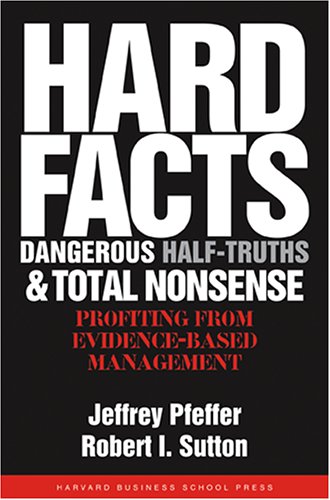
New Book - Hard facts...

Jeffrey Pfeffer & Robert I. Sutton
Hard facts, dangerous half-truths, and total nonsense: profiting from evidence-based management
Harvard Business School, 2006, 658.403 PFE


Jeffrey Pfeffer and Robert I. Sutton show how companies can bolster performance and trump the competition through evidence-based management, an approach to decision-making and action that is driven by hard facts rather than half-truths or hype. Hard Facts guides managers in using this approach to dismantle six widely held—but ultimately flawed—management beliefs in the core areas of leadership, strategy, change, talent, financial incentives, and work-life balance. This practical and candid book challenges leaders to commit to evidence-based management as a way of organizational life – and shows how to finally turn this common sense into common practice.

Read a review of Hard Facts from The Observer Newspaper.
Read an abstract of Hard Facts adapted into an article for the Strategy & Leadership Journal.

Available to borrow by RSA Fellows - contact the Library for details. Ask about our Freepost service.

Wednesday, May 17, 2006

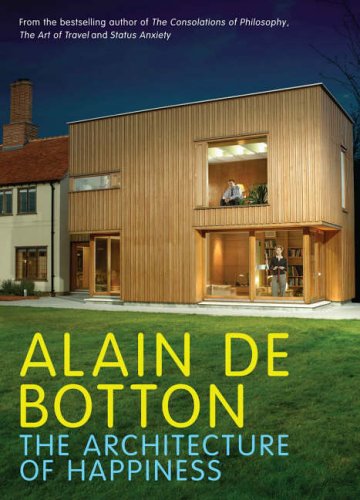
New Book - The architecture of happiness

Alain de Botton
The architecture of happiness
Hamish Hamilton Publication, 2006, 720.1 DEB


Accompanied by a successful Channel 4 television series, The architecture of happiness suggests that it is architecture's task to render vivid to us who we might ideally be. Writer and philosopher Alain de Botton considers how our private homes and public edifices - from those of Christopher Wren to those of Le Corbusier and Norman Foster - influence how we feel, as well as how we could learn to build in ways that would increase our chances of happiness.

Read reviews of The architecture of happiness from The Guardian and The Independent newspapers.

Monday, May 15, 2006

New Book - Unspeak

Steven Poole
Unspeak
Little Brown & Co, 2006, 306.44 POO


Defining its supject as a "mode of speech that persuades by stealth", Unspeak is a book about language as a weapon. Every day, we are bombarded with those apparently simple words or phrases that actually conceal darker meanings. For any government or organization seeking to exert power over a society, connecting with the general public and seeking to influence or even manipulate them is a vital task. Within a democratic society, the use of language is the most powerful tool for achieving this task, whether by a government seeking support for a policy or by a company seeking consumption of a product. Providing on the front cover of the book the terms "climate change", "war on terror" and "ethnic cleansing" as examples of unspeak, Steven Poole traces the globalizing wave of modern unspeak from culture wars to the culture of war, and reveals how everyday words are changing the way we think.

Read a review of Unspeak by Tony Blair's former communications director Alistair Campbell in The Guardian Newspaper.

Steven Poole continues his work in Unspeak through his regularly updated Unspeak blog.

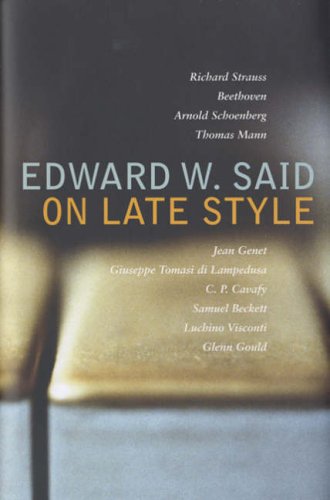
New Book - On Late Style

Edward W. Said
On Late style
Bloomsbury, 2006, 809 SAI


"Each of us can readily supply evidence of how it is that late works crown a lifetime of achievement. Rembrandt and Matisse, Back and Wagner. But what of artistic lateness not as harmony and resolution but as intransigence, difficulty and unresolved contradiction?"

Published posthumously, On Late style is Edward Said's last book of literary criticism, and appropriately examines works created at the end of the lives of many artists across a myriad of genres, including Beethoven, Jean Genet and Glenn Gould. It illuminates the ways in which these works differed from the artists' previous works in an attempt to explore what they tell us about the creative evolution throughout the life of an artist.

Other RSA Library items by or featuring Edward W. Said include...

Parallels and paradoxes: explorations in music and society
Bloomsbury, 2003, 780 BAR

The End of the peace process: Oslo and after
Granta Books, 2002, 956.05 SAI

Reflections on exile and other literary and cultural essays
Granta Books, 2000, 814.54 SAI

Blaming the victims: spurious scholarship and the Palestinian question
Verso, 1998, 956.940 SAI

Culture and imperialism
Vintage, 1995, 306.2 SAI

Edward Said: the last interview - extended version (DVD)
ICA Projects, 2004, DVD DIB

Thursday, May 11, 2006

New Books - Oak / The secret life of trees

ColinTudge
The secret life of trees
Allen Lane, 2005, 582.16 TUD

William Bryant Logan
Oak: the frame of civilization
W. W. Norton, 2005, 634.972 LOG


The oak tree is found throughout the temperate zones of the world; knowing how to use it has made an astonishing difference to human history. Acorn-eating has sustained humans and animals; oak has been central to religious rites, heating, homemaking and travel by land and sea; the ink from oak galls advanced the written word; oak casks have made possible food and drink storage and transport; oak ships have fought the dramatic naval battles that determined political and economic history. In a lively literary prose typical of this playwrite, William Briant Logan combines science, philosophy, spirituality and history in his biography of this essential tree that has been integral to the path of human civilization, and since time immemorial has been a symbol of loyalty and strength, generosity and renewal. Read a review of Oak at Guardian Unlimeted. Oak is related to the RSA project: RSA 250th anniversary tree planting project.

The age of trees often inspires awe, from the redwoods of California to English oaks. We wonder how they live so long, and how they really work. After all, trees provide us with air to breathe, fruits to eat, and wood to build with - and they do the same for thousands of creatures and plants. In The Secret Life of Trees, Colin Tudge explores the way trees work and what they are, finding out how they communicate, how they tell the time, how they came to exist, and much much more. Strange and surprising, this witty and informative book will make everyone fall in love with the trees around them. A respected science journalist, Colin Tudge has writen for all the major British science magazines and newspapers. Read his article of May 2004 in The Guardian newspaper on GM crops and worls agriculture. The Secret life of trees is related to the RSA project: RSA 250th anniversary tree planting project

Report & Download - Urban Task Force

In 1998 Richard Rogers was invited to chair a Government Task Force charged with translating sustainable urban development principles into strategic advice for planning authorities in England.

The Urban Task Force was faced with 3 specific urban challenges:

  • decline of regional inner-city areas and communities.
  • an official prediction of a requirement for 4 million additional households.
  • suburban sprawl consuming greenfield sites at an alarming rate, causing social and economic decline within inner-city areas.

The mission statement of the Urban Task Force was 'To identify causes of urban decline, to recommend solutions that will bring people back into our cities and to establish a vision for urban regeneration based on the principles of:

  • design excellence.
  • social well-being.
  • environmental responsibility.
  • within a viable economic and legislative framework.'

The result, published in 1999 and making over 100 recommendations, was the report 'Towards an Urban Renaissance: the final report of the Urban Task Force'. The executive summary of this report is available to download.

Six years on, the Urban Task force has come together again to write the report 'Towards a Strong Urban Renaissance'. Published in November 2005 its aim is to stimulate further public debate, encourage new thinking and build on the significant action prompted by the original report.

The work of the Urban Task force is relevant to the RSA projects: RSA Inclusive Design Resource and RSA Commission on Illegal Drugs, Communities and Public Policy, within the RSA Manifesto challenge : Fostering Resilient Communities.

Wednesday, May 03, 2006

New Book - Alternatives to prison

Anthony Bottoms, Sue Rex & Gwen Robinson (ed.)
Alternatives to prison: options for an insecure society
Willan Publishing, 2004, 364.680 ALT


Compiling research from a variety of experts conducting research throughout the UK, Alternatives to prison provides a valuable contribution to the search for alternative approaches to punishment and dealing with offenders. It provides a comprehensive and wide-ranging review of the range of issues associated with using the variety of non-custodial sanctions, such as the idea of punishment as communication, electronic monitoring and the community supervision of offenders, and sentencing management.

Including a chapter on dealing with substance-misusing offenders within the community, Alternatives to prison is of relevance to the RSA Commission on Illegal Drugs, Communities and Public Policy.

The RSA is just one organization within a significant movement dealing with public policy including issues of crime & punishment such as prisons. These range from activist groups such as No More Prison, to think tanks such as Rethinking Crime & Punishment who have a number of reports available to download, and academic institutions such as the International Centre for Prison Studies at King's College London.

Tuesday, April 25, 2006

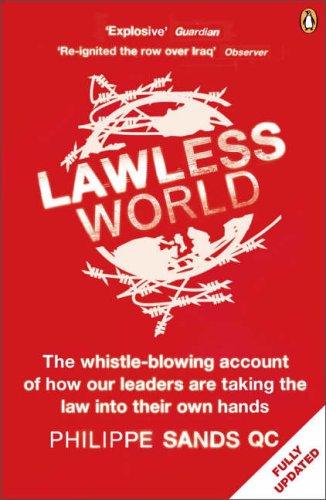
New Book - Lawless world

Philippe Sands
Lawless world: the whistle-blowing account of how Bush and Blair are taking the law into their own hands
Penguin Books, 2006, 327.41 SAN


International lawyer Philippe Sands presents a fascinating exposé of how the US and UK governments are riding roughshod over international agreements on human rights, war, torture and the environment - the very laws they put in place. The original publication of Lawless world changed the political agenda overnight, and forcing Tony Blair to publish damning material that he'd tried to hide, and prompting renewed media coverage of the justification for the war in Iraq. Now, in this updated edition the author looks at why global rules matter for all of us, and why it is so vital that we act now in order to preserve them.

Read a Guardian Unlimited review of Lawless world.

New Book - Designers are wankers / How to be a graphic designer...

Lee McCormack
Designers are wankers
About Face Publishing, 2005, 702.3 MAC

Adrian Shaughnessy
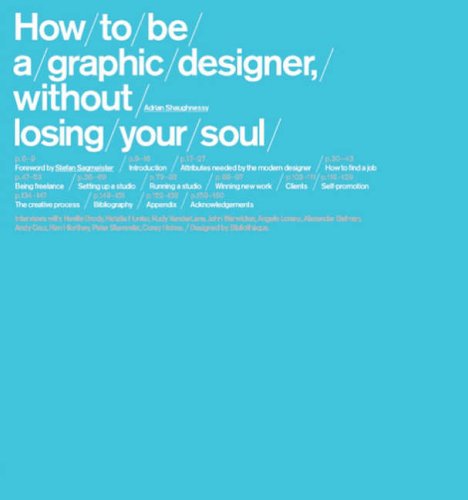
How to be a graphic designer, without losing your soul
Laurence King, 2005, 741.602 SHA


In Designers are wankers, Lee McCormack, designer of "Oculas" explores how creative graduates can make the leap from education into employment within the field of design. Including interviews with influential names in the field of design such as typographer Neville Brody and fashion entrepreneur Paul Smith, Designers are wankers is a valuable guide for anyone embarking on, or developing a career in design, despite it's attention grabbing title!.

Aimed at the independent-minded, How to be a graphic designer without losing your soul is another useful handbook addressing the concerns of young designers who want to earn a living by doing expressive and meaningful work but want to avoid becoming a hired drone working on soulless projects. It includes interviews with 10 leading designers, such as Natalie Hunter co-founder of Airside, John Warwicker of Tomato, and Angela Lorenz.

New Book - The Legalization of drugs

Douglas N. Husak & Peter De Marneffe
The Legalization of drugs
Cambridge University Press, 2006, 364.177


In The Legalization of drugs two prominent law philosophers present different sides of the debate over the legalization of drugs. Douglas Husak argues in favor of drug decriminalization, by clarifying the meaning of crucial terms, such as legalize, decriminalize, and drugs; and by identifying the standards by which alternative drug policies should be assessed. He critically examines the reasons typically offered in favor of our current approach and explains why decriminalization is preferable. Peter de Marneffe argues against drug legalization, demonstrating why drug prohibition, especially the prohibition of heroin, is necessary to protect young people from self-destructive drug use. If the empirical assumptions of this argument are sound, he reasons, drug prohibition is perfectly compatible with our rights to liberty.

An excerpt from The Legalization of drugs outlining Douglas Husak's argument, as well as the introduction and first chapter of his earlier book Drugs and Rights are available on-line.

The Legalization of drugs is a resource for the RSA project: RSA Commission on Illegal Drugs, Communities and Public Policy.

New Book - Planet of slums

Mike Davis
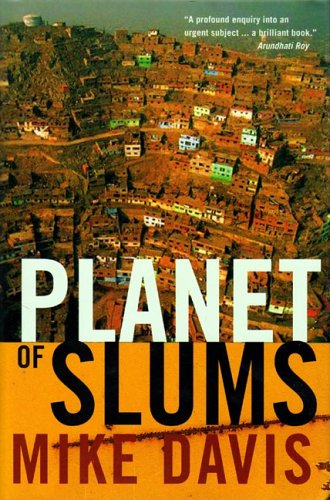
Planet of slums
Verso, 2006, 307.76 DAV


Planet of slums charts the expected global urbanization explosion over the next thirty years and points out that outside China most of the rest of the world's urban growth will be without industrialization or development, rather a 'perverse' urban boom in spite of stagnant or negative urban economic growth. With a third of the global urban population living in Dickensian slums, at least half under the age of twenty, Mike Davis explores the threat of disease, of forced settlement on hazardous terrains, and of state violence, on a huge amount of the world population. A taste of Davis' extensive investigation into urban poverty can be found in his article for Orion magazine, entitled Slum Ecology.

New Book - Among the dead cities

A. C. Grayling
Among the dead cities: was the Allied bombing of civilians in WWII a necessity or a crime?
Bloomsbury, 2006, 940.53 GRA


In the course of WWII, the air forces of Britain and the United States of America carried out a massive bombing offensive against the cities of Germany and Japan, ending with the destruction of Hamburg and Dresden, Tokyo, Hiroshima and Nagasaki. A. C. Graying investigates whether it was justified by the necessities of war. Or was it, in fact, a crime against humanity? Beyond an investigation into a specific aspect of Second World War history, Among the dead cities poses a highly relevant question of morality within warfare in general. A.C. Grayling's March 2006 article on the role of bombing in the war in Iraq in The Guardian Unlimited provides a thoroughly modern context for his observations and argument, while an interview with The Independent newspaper explains exactly why this cultural philosopher has turned his attention to the Allied bombings of Germany & Japan.

New Book - The Great Transformation

Karen Armstrong
The Great transformation: the world in the time of Buddha, Socrates, Confucius and Jeremiah Atlantic, 2006, 930.16 ARM


The centuries between 800 and 300 BC saw an explosion of new religious concepts. But why did Socrates, Buddha, Confucius, Jeremiah, Lao Tzu and others all emerge in this specific five-hundred-year span? In The Great transformation, Karen Armstrong examines this period and the connections between this seemingly disparate group of philosophers, mystics, and theologians.

Useful reviews of The great Transformation can be found at The Independent Online and The Borzoi reader online.