Friday, February 23, 2007

Featured Book - Hogarth

Mark Hallett
Hogarth

Phaidon, 2000, 709 HOG/HAL

A comprehensive collection of works by William Hogarth has recently gone on display in a major new exhibition at the Tate Britain Gallery.

As well as a a substantial collection of contemporary art and design books supporting current RSA projects such as our Arts & Ecology programme or our recent Art for Architecture project, the RSA Library also contains works on British and international art throughout history.

Hogarth is an comprehensive analysis of the life and work of William Hogarth, exploring both what Hogarth had to say about the rapidly changing eighteenth century society in which he worked, and what he still has to offer modern art and society as a whole. Mark Hallett examines the circumstances and meaning of the 'moral pieces' for which Hogarth is perhaps best known, illustrating the role he played as a witty and highly observant social commentator. Yet he also pays tribute to Hogarth's talent as painter of portraits and group scenes, and the versatility he demonstrated in being able to work with paint, ink and engraving.

Why not use the book as an accompaniment to a tour of the Hogarth Exhibition or a visit to Hogarth's House in west London.

Read the British Museum's William Hogarth Fact sheet.

Read an article about Hogarth from The Guardian newspaper.

Friday, February 16, 2007

RSA Library Update - February 2007

What follows is a complete list of RSA library acquisitions for the month of February 2007. Fellows are welcome to e-mail library@rsa.org.uk if they wish to borrow any of these items, or search the library catalogue for thousands of other titles....

000s – Generalities

100s – Philosophy & Psychology

Michael Frayn
The Human Touch: Our Part in the Creation of a Universe
Faber and Faber, 2006, 120 FRA
What would that universe be like if human being were not here to observe it? Would there be still be numbers, or scientific laws? Would the universe even be vast, without our tininess to give it scale? Written by the author of award winning novels, such as "Spies", this book aims to confront these mind boggling ideas head-on.


Roger Steare
Ethicability: (n) How to Decide What's Right and Find the Courage to do it
Roger Steare Consulting Limited, 2006, 170 STE
Based on a clear, concise and robust model which combines insights from 3,000 years of moral philosophy and the latest scientific research into human psychology and behaviour, Ethicability enables us to understand and resolve a wide range of moral dilemmas


George Gaskell
Genomics and Society: Legal, Ethical and Social Dimensions
Earthscan, 2006, 174.957 GAS
Genomics and Society presents a series of comparative perspectives on the social, ethical and legal implications of genomics. This book, encapsulates the lessons to be learned from the controversies of the 1990s, and raises the level of debate on the societal implications of developments in genomics. It includes a range of case study material.

200s – Religion

300s – Social Sciences


David Edgerton
The Shock of the Old: Technology in Global History Since 1900
Profile Books Ltd, 2007, 303.483 EDG
The Shock of the Old offers a global account of the place of technology in twentieth century history. This book aims to challenge the idea that we live in an era of ever increasing change, and so dismisses naivety’s about 'the information age'. Interweaving political and cultural history, it shows what it means to think critically about technology and its importance.

Mark Kurlansky
Non-Violence: The History of a Dangerous Idea
Jonathan Cape, 2006, 303.66 KUR
The conventional history of nations, even continents, is a history of warfare. According to this view, all the important ideas and significant changes of humankind were put forward in an effort to win one violent bloody conflict or another. In this exploration of pacifism, various views are discussed alongside several non-violence theorists.


David Cameron
Social responsibility: the Big Idea for Britain's Future
The Conservative Party, 2007, 320.52 CAM
In this collection of speeches, Conservative Party leader David Cameron outlines his visions for a more socially responsible society and the future of British politics.


Ronald Dworkin
Is Democracy Possible Here?: Principles for a New Political Debate
Princeton University Press, 2006, 320.973 DWO
Is Democracy Possible Here? identifies and defends core principles of personal and political morality that all citizens can share. This work shows that recognizing such shared principles can make substantial political argument possible and help replace contempt with mutual respect.
thuRSdAy related item: "Professor Ronald Dworkin", Thursday 1 February 2007.


Duncan Watts & Colin Pilkington
Britain in the European Union Today
Manchester University Press, 2005, 327.41 PIL
Duncan Watts, the author of three previous books on the European Union and Britain's relationship with it, has produced a new account of this 'uneasy partnership'. This edition is based on the original by Colin Pilkington and provides a review of how European Unity has been handled by British governments and politics. The content has been updated to include all new developments including the proposed new constitution and the euro-elections of 2004, as well as additional material considering issues such as the role of pressure groups.


P. M Strong & Anne Murcott (ed.)
Sociology and medicine: Selected Essays by P.M. Strong
Ashgate Publishing Co., 2006, 362.104 STR
Doctors and patients, inter-professional rivalries, how sociologists tackle the study of vital topics in health - all these are themes in medical sociology. Posthumously gathered together, this book contains 13 of Philip Strong's essays, which looks at these themes and allows the reader to trace the development in Strong's thought over his career.

RSA Fellows' donation.

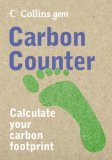
Mark Lynas
Carbon Counter
Collins, 2007, 363.738 LYN
What effect are you having on the environment? If you buy Kenyan green beans what is the CO2 cost? What about your journey to work, your fridge or your clothes? Starting with your home gas and electricity supplies and usage, this work takes you through each part of your life and helps you add up the impact you are making on the environment.


400s – Language

500s – Natural Sciences &
Mathematics

600s – Technology (Applied Sciences)


Richard Lynch
Corporate Strategy
FT Prentice Hall, 2006, 658.401 LYN
Corporate Strategy provides a balanced and in-depth exploration of rational and creative approaches to strategy development from around the globe.

Debbie Weil
The Corporate Blogging Book: Absolutely Everything You Need to Know to get it Right
Portfolio, 2007, 659.202 WEI
A guide to corporate blogging and its potential benefits for today's organizations, The corporate blogging book cites the effectiveness and affordability of well-orchestrated blogs, addressing key questions in the areas of legal risks, time requirements, and the techniques of the corporate world's top-rated blog examples.


700s – The Arts

Paul Barker (ed.)
Arts in Society
Five leaves Publications, 2007, 700.941 BAR
Arts in Society comprises a set of lucid essays on photography and painting, films, design, TV and theatre, buildings and towns – discussion points about culture in the 60s and 70s. Contributors include: Angela Carter, John Berger and Michael Wood.
RSA Fellows’ donation.


800s – Literature

900s – Geography & History

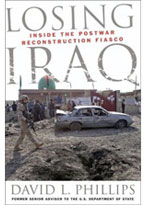
David L. Phillips
Losing Iraq: Inside the Post-War Reconstruction Fiasco
BasicBooks, 2006, 956.704 PHI
According to David L. Phillips things didn't go wrong in postwar Iraq because the US lacked a plan. Things went wrong because the US was blinded by ideology and ignored planning that was already underway. Losing Iraq tells the story of the tragedy of Iraq, from the first discreet meetings to plan the political transition through the debacle the US finally created.

Reference

The 45th Civil Service Yearbook
The Stationery Office Books, 2007, REF 351.025
This is the official guide to the Civil Service. It lists all ministries and departments in England, Northern Ireland, Scotland and Wales, and tells you where they are, what they do and who is in charge.


Claudia Rios (ed.)
Charities Digest 2007: Selected Charities and Voluntary Organisations
Waterlow, 113th edition, 2006, REF 361.7
A comprehensive, up to date guide to registered charities in Britain.


DVD

BBC
Who Do You Think You Are?: Series Two (DVD)
BBC DVD, 2006, DVD BBC

Explore the world of genealogy and learn how to trace your family history. Who Do You Think You Are follows celebrities such as Jeremy Paxman, Sheila Hancock and Stephen Fry as they search into their past and find out interesting and surprising facts about their ancestors

Morgan Freeman [Narrator]
March of the Penguins: As Told by Morgan Freeman (DVD)
Warner Independent Pictures, 2005, DVD FRE
Narrated in soothing tones by actor Morgan Freeman, this heart-warming film focuses on a colony of hundreds of Emperors as they return, in a single-file march of 70 miles or more, to their frozen breeding ground, far inland from the oceans where they thrive.


Al Gore
An Inconvenient Truth: a Global Warning (DVD)
Paramount Classics, 2006, DVD GOR
An Inconvenient truth offers a passionate and inspirational look at the fervent crusade of former US presidential candidate Al Gore to halt global warming's deadly progress in its tracks by exposing the myths and misconceptions that surround it.


Martin Scorsese
No Direction Home: Bob Dylan
Paramount Home Entertainment, 2005, DVD SCO
In this historical PBS documentary, director Martin Scorsese crafts an unprecedented exploration of Bob Dylan’s creative process during his ground breaking five-year period between 1961 and 1966.

Stern launches climate change review at the RSA

Nicholas Stern
The Economics of Climate Change: The Stern Review
Cambridge University Press, 2007, 363.738 STE

In October 2006, Sir Nicholas Stern published the ground-breaking and much discussed 'Stern review' of the cost of climate change.

On 15 January 2007, Stern presented to a packed audience in the Great Room of the RSA in London, as he discussed the nature of the economic challenges we face and how they can be met, in the UK and globally. The event generated significant political and media interest and featured contributions from a high profile panel of experts including Stephanie Flanders who is BBC Newsnight’s Economics Editor, Charlie Kronick who is Senior Policy Adviser to Greenpeace and has also been involved in the RSA Arts & Ecology project's "No Way Back" Conference, as well as Dr Jon Gibbins of Imperial College.

This RSA book launch event marked the publication of the report in book form for the first time. The Economics of Climate Change argues that there is now clear scientific evidence that emissions from economic activity are causing changes to Earth's climate, tying in with the RSA's CarbonLimited Project which examines the potential for personal carbon trading in tackling climate change.
For more information about the RSA's work on personal carbon trading, visit:
www.theRSA.org/carbon

Friday, February 09, 2007

Matthew Taylor - Pro-Social Behaviour


Matthew Taylor

Pro-Social Behaviour - the Future: it's up to us

In his first full lecture since joining the RSA as Chief Executive in November 2006, former Downing Street adviser Matthew Taylor has opened up a new avenue of action for the RSA programme department.

Entitled Pro-Social Behaviour - the Future: it's up to us, and featuring contributions from Minister for the Third Sector Ed Miliband and Professor Stephen Coleman of Leeds University, the lecture was presented to a full house in the RSA's Great Room on 7 February 2007.

Emphasising the power of socially accepted norms in shaping the way we behave as a society, and advocating a more citizen-centric approach to government and social change, the lecture gave a strong indication of the broad society changing issues that Matthew Taylor clearly wants the RSA to engage in under his leadership.

To listen to Matthew Taylor's lecture as an audio file or to read a pdf of his full essay, please visit the RSA website.

Read an interview with Matthew Taylor from The Daily Telegraph, and his personal views on Tony Blair handing over power from the Guardian Website.

Friday, February 02, 2007

New Book - Losing Iraq

David L. Phillips
Losing Iraq: Inside the Postwar Reconstruction Fiasco
Basic Books, 2005, 956.704 PHI

Like the fighting itself, the battle over the best way bring lasting peace to Iraq continues to rage. George W. Bush has created even more controversy recently by going against the recommendations of the
Iraq Study Group Report, and committing a further 20,000 troops as part of a new Iraq strategy.

Middle East expert David Phillips was part of the
State Department's Future of Iraq group which planned out the plan for the reconstruction of Iraq in great detail, and is therefore in anexcellentt position to explore how the disregard of this planning has lead to the failures of reconstruction up to now. Losing Iraq doesn't just criticize the policies of unilateralism, preemption, and possible deception that launched the war; it documents the process of returning sovereignty to an occupied Iraq.

The problems encountered in Iraq are troubling not only in themselves but also because they bode ill for other nation-building efforts in which the United States may become mired through this administration's doctrine of unilateral, preemptive war. Losing Iraq looks into the future of America's foreign policy with a clear-eyed critique of the problems that loom ahead.

Read a general
analysis of the current post Iraq war literature by Mark Leonard in Prospect Magazine.
Read a short
analysis of the effort to reconstruct Iraq by K M Pollack, Director of Research at the Saban Center for Middle East Policy at the Brookings Institution.

Friday, January 26, 2007

New Book - Carbon Counter

Mark Lynas
Carbon Counter: Calculate Your Carbon Footprint
HarperCollins Publishers, 2007, 363.738 LYN

The RSA's highly successful
CarbonLimited project has made a valuable contribution to the current political and social movement towards tackling climate change. By creating the formula for a system whereby individuals have a tradable annual quota for their production of carbon, the project not only places a financial cost to the production of carbon but also alerts each individual to their personal responsibility to actively participate in the reduction of carbon emissions.

Mark Lynas' handy pocket sized book, Carbon Counter: Calculate Your Carbon Footprint, also makes a real contribution to publicising the responsibility of all of us as individuals to reduce our carbon output. Conceived to be as practical and usable as possible, Mark Lynas not only provides us with a step by step guide to calculating your carbon emissions, he also explains why climate change is the world’s biggest issue, and what you can do to reduce your footprint.


Mark Lynas has previously been involved in the RSA Arts & Ecology Project, taking part in discussions such as 'Arts & Ecology - on the page', which explored the way writers are addressing the environmental challenges of our time.

Listen to a transcript of RSA Chairman Gerry Acher's recent RSA lecture
'Carbon: A Personal Responsibility'.

Read about the BBC News experiment, following an average family attempting to cut their carbon footprint.

Read a review of Carbon Counter: Calculate Your Carbon Footprint from the Guardian Website.

Friday, January 19, 2007

New Book - Britain in the European Union Today

Duncan Watts & Colin Pilkington
Britain in the European Union Today
Manchester University Press, 2005, 327.410 PIL

On 24 January 2007, the RSA continues it's successful
Lecture Programme with a debate entitled "The EU: going Britain's way?".

Providing good background to the lecture, this fully updated third edition of Britain in the European Union Today discusses every aspect of Britain's relationship with the EU. The book covers issues of public interest from migration to Britain from new EU member states, to the introduction of the Euro. However it's deeper focus is on the state of the 'uneasy partnership' between Britain and the EU, critically analyzing developments in this relationship and charting the growing impact of Europe on domestic British politics.

Browse the
Guardian Special report: "Britain and the EU", which gathers together a large number of articles discussing a many aspects of Britain's current relationship with the EU.

Reijo Kemppinen, one of the speakers at this forthcoming RSA lecture, is Head of Representation, European Commission Representation in the United Kingdom. View the website of
The European Commission Representation in the United Kingdom.

Thursday, January 11, 2007

New book - China: Friend or Foe?


Hugo De Burgh
China: friend or foe?
Icon, 2006, 303.482 BUR

China’s economy is growing phenomenally, with half the world’s cranes currently on its soil. Its 1.3 billion people have around 300 million mobile phones, and a purchasing power second only to the US. Yet, especially in rural areas, there is widespread poverty. Tackling issues such as how China is managed and the way it uses its political and cultural influence, professor of Journalism and expert on China Hugo De Burgh asks whether China is a friend to be welcomed or a foe to be guarded against?

Watch a video of Hugh De Burgh discussing China: friend or foe? from
Meet the author.

Read the view of lawyer, economist and finance journalist
Ben Stein on the question of China as a economic threat to the West.

RSA Library Update - January 2007

What follows is a complete list of RSA library acquisitions for the month of January 2007. Fellows are welcome to e-mail library@rsa.org.uk if they wish to borrow any of these items, or search the library catalogue for thousands of other titles....

000s - Generalities

Michael Lesk
Understanding Digital Libraries
Morgan Kaufmann, 2005, 025.002 LES
Understanding digital libraries focuses on the challenges faced by librarians and computer scientists in a field that has been altered by the growth of the Web. This book first discusses technology and examines issues such as varying media requirements, indexing and classification, and more. It then tackles the human contexts in which digital libraries function.

I. H. Witten & David I. Bainbridge
How to Build a Digital Library
Morgan Kaufmann, 2002, 025.002 WIT
How to build a digital library offers the knowledge and tools needed to construct and maintain a digital library. The authors sketch the history of libraries - both traditional and digital - and their impact on present practices and future directions, as well as offering coverage of the practical standards used to represent and store information digitally.


100s - Philosophy & Psychology

Christopher Hitchens
Letters to a Young Contrarian
Basic Books, 2002, 168 HIT
Christopher Hitchens has made a career of disagreeing in profound and entertaining ways. While bemoaning the loss in contemporary society of the skill of dialectical thinking, he aims to inspire future generations of intellectuals, mavericks, rebels, angry young (wo)men and dissidents.

200s - Religion

Rowan Williams
Lost Icons: Reflections on Cultural Bereavement
Morehouse, 2002, 261.5 WIL
Lost Icons is a sobering inquiry into the structures that support (or fail to support) the development of authentic selfhood and the maintenance of a just society

300s - Social Sciences

Hugo De Burgh,
China: Friend or Foe?
Icon, 2006, 303.482 BUR
China's economy is growing phenomenally, with half the world's cranes currently on its soil. Its 1.3 billion people have around 300 million mobile phones, and a purchasing power second only to the US. Yet, especially in rural areas, there is widespread poverty. Tackling issues such as how China is managed and the way it uses its political and cultural influence, Hugo De Burgh asks whether China is a friend to be welcomed or a foe to be guarded against?

Mark Poster
Information Please: Culture and Politics in the Age of Digital Machines
Duke University Press, 2006, 303.483 POS
Information please conceptualises a relationship between humans and information machines that avoids privileging either the human or the machine but instead focuses on the structures of their interactions. Mark Poster explores how texts, images, and sounds are made different when they are mediated by information machines.

Mary Kaldor
New and Old Wars: Organized Violence in a Global Era
Polity, 2006, 303.66 KAL
New and old wars deals with the implications of 'the new wars' in the post 9-11 world. Mary Kaldor shows how old war thinking in Iraq has greatly exacerbated what is archetypically new war - with insurgency, chaos and the occupying forces' showing a lack of direction and describes the lesson we need to learn about this different kind of conflict emerging in the 21st Century.

Anthony Crosland
The Future of Socialism
Constable and Robinson, 2006, 320.531
The Future of Socialism set out the philosophical framework for the New Labour project, decades before the movement itself materialised. This new edition includes a piece by Dick Leonard, Crosland's Personal Private Secretary, who knew the radical philosopher well, an introduction by Gordon Brown, and an afterward from Susan Crosland.

Department for Communities and Local Government
Developing the Local Government Services Market to Support a Long-term Strategy for Local Government
Communities and Local Government Publications, 2006, 320.8 DEP
This report presents key findings from an analysis of the local government market. It considers key challenges and opportunities faced by markets in local government services and identifies issues influencing the effectiveness of competition across the sector

Barton Biggs
Hedge Hogging
Wiley, 2006, 332.645 BIG
Hedge hogging looks at the investment and hedge fund world, through the eyes of industry legend Barton Biggs. This book reveals Biggs' experiences with friends and acquaintances over his investment years. It shows how the challenging battle for investment survival can be its own life-or-death struggle for individuals participating in this field.

RSA
Promoting Innovation and Renewing Creativity: A Balanced Intellectual Property Framework for the Digital Age
RSA, 2006, 346.048 RSA
In this latest addition to the RSA Adelphi Charter, respected professionals from a variety of different fields discuss the challenge of encouraging principals of intellectual property that actively encourage innovation and creativity.

James K. Boyce
Natural Assets: Democratizing Environmental Ownership
Island Press, 2003, 363.7 BOY
Low-income communities frequently suffer from a lack of access to, or lack of control over, the natural resources that surround them. Natural assets explores strategies for expanding the quantity and enhancing the quality of natural assets in the hands of low-income individuals and communities.

Bob Lingard
The RoutledgeFalmer Reader in Education Policy and Politics
Routledge, 2006, 379 LIN
The RoutledgeFalmer reader in education policy and politics provides the reader with an impressive selection of articles on all aspects of education policy and politics. Students of education policy and politics will find this Reader useful for further reading and understanding, as well as an essential overview of the most important issues surrounding the subject.

400s - Language


500s - Natural Sciences & Mathematics

600s - Technology (Applied Sciences)

Don Tapscott & Anthony D. Williams
Wikinomics: How Mass Collaboration Changes Everything
Portfolio, 2006, 658.046 TAP
Today, encyclopedias, jetliners, operating systems, mutual funds, and many other items are being created by teams numbering in the thousands or even millions. While some leaders fear the heaving growth of these massive online communities, Wikinomics argues that this fear is folly, and that smart firms can harness collective capability and genius to spur innovation, growth, and success.

700s - The Arts

800s - Literature

Dennis Walder
Post-colonial Literatures in English: History, Language, Theory
Blackwell, 1998, 820.991 WAL
Post-colonial literatures in English is a textbook on the historical, linguistic and theoretical issues that form post-colonial literary study. This studies three cases: Indian fiction in English, Caribbean and Black British poetry and contemporary South African literature and well as looking at what might follow 'after post-colonialism'.
Fellows donation.

900s - Geography & History

Reference

ASLIB Directory of Information Sources in the UK
Routledge, 14th edition, 2006, REF 026 ASL
The leading information sources reference work on organisations of all kinds. Listings of over 11,000 information providers.

Makoto Ohno (ed.)
The Public Sphere, Intermediary Organizations, and Power in Modern Britain (5 volumes)
Aichi Prefectural University, 2006, REF RSA 062
This piece of research from RSA fellow Makoto Ohno examines the role the Society played in encouraging the cultivation of Madder in the mid-eighteenth century.
RSA history related item.

A.S.K. Hollis
Hollis Publishing, 2006, 6th edition, REF 659.202
Ask Hollis is a comprehensive directory of associations and organisations representing a membership, a mission or a message. It includes profiles of over 6,000 associations, pressure groups, unions, institutes, societies, and represents various interest areas from abrasives through to zoos, from industrial sectors to charities and the consumer.

Who's Who 2007
A & C Black, 159th edition, 2006, REF 920.009
This is the 159th annual edition of the internationally famed big red book, the standard, up-to-date source book of information on people of influence and interest in all fields.

Friday, January 05, 2007

Online Access to Journals through the RSA Library...


When visiting the RSA, fellows can gain online access to the following journals and magazines...

Please contact the RSA Library for details.


Design Week - http://www.designweek.co.uk

The Economist - http://www.economist.com/index.html

Ethical Corporation - http://www.ethicalcorp.com/

Foreign Affairs - http://www.foreignaffairs.org

Frieze - http://www.frieze.com

Green futures - http://www.greenfutures.org.uk

Harvard Business Review - http://www.hbr.com

London Review of books - http://www.lrb.co.uk

McKinsey Quarterly - http://www.mckinseyquarterly.com/home.aspx

New Scientist - http://www.newscientist.com

New Statesman - http://www.newstatesman.com

The Oxford Dictionary of National Biography - http://www.oxforddnb.com/subscribed

Prospect - http://www.prospect-magazine.co.uk/landing_page.php

The Spectator - http://www.spectator.co.uk

Taylor and Francis e-books - http://theRSA.etailer.dpsl.net/home/html/viewbooks.asp

Times Higher Education Supplement - http://www.thes.co.uk

Times Literary Supplement - http://tls.timesonline.co.uk

Wall Street Journal - http://online.wsj.com/home/us

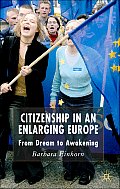
New Book - Citizenship in an Enlarging Europe

Barbara Einhorn
Citizenship in an Enlarging Europe: From Dream to Awakening
Palgrave Macmillan, 2006, 305.430 EIN

The
RSA lecture programme kicks off again in mid-January, with the EU and the role of women in the workforce being two of the first topics up for discussion. These subjects are brought together in the recent book Citizenship in an Enlarging Europe by University of Sussex professor Barbara Einhorn.

The British government is working to promote gender equality in areas such as social participation and employment through legislation and bodies such as the
Women and Equality Unit, but how much of an effect is this having on issues such as the gender pay gap, parental rights, and access to high level professional positions? Furthermore, how much resonance will the policy and legislation driven by leading EU nations have in the day to day lives of EU citizens as a whole? Focusing on the Enlargement of the European Union into Central and Eastern Europe, Einhorn discusses the framework set out by the EU for equality between men and women. She argues that, if managed correctly, this represents an opportunity for a process of democratisation, marketisation and nationalism that can improve the status of women in countries that have recently entered the EU or will do so in the near future.

Read the
Government Action Plan of the Women and Equality Unit's 'Women and Work Commission', published in September 2006.

Read the European Union
Framework for Equality Between Men and Women.

Thursday, December 21, 2006

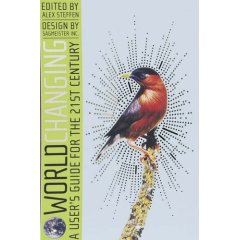
New book - World Changing


Alex Steffen (ed.)
Worldchanging: a user's guide for the 21st century
Abrams, 2006, 333.7 WOR

Worldchanging began with the belief "That the motive, means and opportunity for profound positive change are already present. That another world is not just possible, it's here. We only need to put the pieces together".

From this simple premise has developed a dynamic not for profit organisation that provides a sophisticated web resource for anyone interested in the ways technology, organisation and collective action can change the world for the better. Having won much critical acclaim as a blog, and demonstrating the great power and usefulness of blogging as a developing medium, Worldchanging.com has been described by science fiction author
Bruce Sterling as "The most important web site on the planet".

Browse the website or borrow the book from the
RSA Library, and remember, "Changing the world is a team sport."

Friday, December 15, 2006

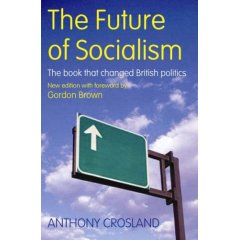
New book - The Future of Socialism

Andy Crosland
The Future of Socialism
Constable, 2006, 320.531 CRO

First published in 1956, the latest edition of
Andy Crosland's book The Future of socialism boldly declares itself to be "the book that changed the face of British politics".

Despite being written so long before the 'new labour' movement, Crosland, who was a labour MP, was what could be called a revisionist socialist and so held views that posed significant challenges to what many people would consider the traditional 'old labour' values. The Future of socialism is so clearly relevant to the new labour movement that Gordon Brown writes the forward to the latest edition of the book, and Roy Hattersley, in an article in the
Times Online argues that:

'If anybody in Labour's leadership is interested in the ideas on which "renewal" could be built, Tony Crosland's The Future of Socialism, published 50 years ago this month, provides the classic formula for relating the ideals of social democracy to the realities of the modern world.'

As support for the current labour government dwindles, the publication of this new edition is timely. The philosophy set out by Crosland is fundamental for the New Labour project, and some might argue, also contains the key for reviving the fortunes of the Party of the future
.

The Future of socialism is available to borrow now in the RSA library.

Friday, December 08, 2006

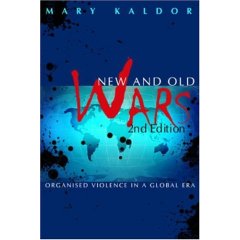
New Book - New & Old Wars


Mary Kaldor
New & Old Wars: Organized Violence in a Global Era
Polity Press, 2006, 303.66 KAL

Tony Blair's recent visit to Washington DC and the
increased pressure placed on George W. Bush by the publishing of the findings of the Iraq Study Group, has sharpened the focus of the world's attention to the question of 'ending' the war in Iraq.

From this timely new edition of LSE professor
Mary Kaldor's book New & old wars: organized violence in a global era, we can see how the continued and intensifying violence in Iraq constitutes a new war in witch 'the actors are both global and local, public and private. The wars are fought for particularistic political goals using tactics of terror and destabilization that are theoretically outlawed by the rules of modern warfare".

Fully updated and containing a brand new chapter unpacking this issue of war in the post 9/11 world, Kaldor argues that the US-British understanding of a war as being between two nation states (what she calls an 'old war') is not appropriate for addressing the complex nature of 'new war'. New & old wars is a bold re-conceptualization of war in the globalized world. Understanding Kaldor's message and addressing the issues she identifies will be crucial in determining the future direction of global conflict and conflict resolution.

Mary Kaldor presented an RSA lecture in October 2006 entitled 'New & Old Wars'; click the links to listen to it or view it in PDF format.


Read a concise response to the Iraq war from Mary Kaldor in the independent global current affairs website - OpenDemocracy.

Friday, December 01, 2006

New Report - Status Quo...?

Andrew Missingham.
Status Quo...?: An Exploration of the Status of Composers, Performers and Songwriters in the UK's Creative Economy.
The Musicians' Union, 2006, 780.905 MIS.

In October of this year RSA Fellow Andrew Missingham published a report commissioned by
The Musicians' Union and The British Academy of Composers & Songwriters, examining the status of composers, performers and songwriters in the UK's creative economy.

The UK creating economy is growing quickly and obtaining an increasing significance in term of the UK's wider economic development and cultural landscape. In this report, Missingham suggests that the current 'status quo' is not capable of sustaining the great potential of the world creative economy in the 21st Century, and highlights the need for a new system that encourages the creation of intellectual property (IP).

The report discusses how recent developments within the creative industries in Britain have often focused on the exploitation of IP and questions the effect this is having on creative production. The RSA's recent project on intellectual property rights, the
'Adelphi Charter', constitutes a significant piece of research into the role of IP legislation and a template for a new approach that stimulates IP.

Andrew Missingham has worked for the
Institute of Contemporary Arts, Paul McCartney's Liverpool Institute for Performing Arts and in 2002 he founded the arts consultancy and 'think and do tank' , 'the hub'.

The report is available to borrow from the RSA library; alternatively the full text is available to download
here.

Read a debate between Andrew Missingham and Piers Hellawell regarding the role of classical music in musical education, published in the New Statesman Magazine in October 2005.

Friday, November 24, 2006

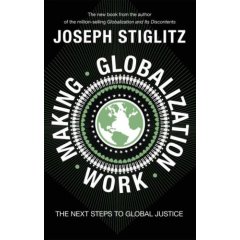
New Book - Making Globalization Work

om
Joseph Stiglitz
Making Globalization Work
Allen Lane, 2006, 337 STI

Nobel Prize winning economist and an adviser to former President Bill Clinton,
Joseph Stiglitz was another highly acclaimed speaker at the RSA lectures that formed part of this years Edinburgh International Book Festival.

Following up from Stiglitz's bestselling book Globalization and it's discontents, his latest book Making globalization work brings us up to date with the rapid development of globalization in recent years, and provides crucial insights into ways in which globalization can be managed and directed towards the greater good of the world population. Addressing the generally negative public attitude towards globalization, Stiglitz not only reminds us of the many benefits that the developed world enjoys because of globalization, he also asserts the great potential of globalization to benefit all. In order for this to happen changes need to be made; the reform of global institutions such as the UN, the IMF and the Work Bank, as well as the creation of a system for overcoming international financial instability, are just some of the recommendations Stiglitz makes. His overwhelming message is of our need to understand global problems such as third world debt and the threat of global warming, and to address them by thinking and acting as one global community.


In Making globalization work, Stiglitz devotes whole chapters to the subjects of debt in the developing world and global warming, his solution for the later being a common global tax on carbon emissions. In an interview with the Sunday Times newspaper, Stiglitz praises Britain for taking a leading role on tackling climate change. A clear example of this is the success of projects such as the RSA's CarbonLimited, which has already had a significant impact in government and specialist circles, so much so that environment minister David Miliband is involved in the project.

Why not join the likes of David Miliband, Jon Snow, Alex James and RSA Chairman Gerry Acher in calculating your personal carbon emissions by registering with CarbonLimited's CarbonDAQ.

Friday, November 10, 2006

RSA Arts & Ecology - "No Way Back"


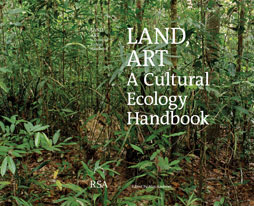
The RSA Arts & Ecology project , a programme supporting the work of the arts in examining and addressing environmental concerns in an international arena, is holding a conference in December 2006 entitled "No Way Back". Providing different perspectives on ecological issues from major thinkers of our time, and timed to coincide with the new project publication Land, art: a cultural ecology handbook, the conference illustrates the significant progress being made in this area by the RSA in association with Arts Council England.

The
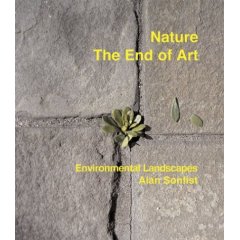
RSA library contains a wealth of resources in this area, including books such as Nature: the end of art - environmental landscapes, a collection of works by Alan Sonfist. The New York City based artist who came to prominence in the 1960's, is a pioneer of narrative environmental art and a leader in the Earth/Land Art Movement. His work illustrates the significant tradition of combining art and the environment to promote social change - of which the RSA is now a major contemporary contributor.

Friday, November 03, 2006

New Book - Common Ground

John Simmons, Rob Williams & Tim Rich (ed.)
Common Ground: around Britain in 30 writers
Marshall Cavendish Editions, 2006, 914.104 COM

Common ground is a celebratory tour around literary Britain. Discussing the relationships between writers and the places where, or about which they write, and commenting on the way both writer an place mutually enrich each other, Common ground also asks what is "the influence of the places that nurtured those works - on ourselves and our subjects?"

Common ground is certainly not an attempt to document every author who has ever become heavily associated with a particular place in Britain, and it is not until you learn more about
26, the not-for-profit literary organization that produced this book, that you begin to understand why it features such an eclectic mix of some the most famous of all British writers, and a number of considerably lesser know writers. For a start, the book is written by 30 different members of the 26 organization, each of whom was responding to an organization wide challenge to write a piece about an author-place relationship that meant something special specifically to themselves. As a group, 26 are concerned with words in general, and many of their founders come from the worlds of advertising, journalism and communications, and so they are perfectly happy to include lyrical musicians such a Van Morrison or the somewhat obscure Stuart Murdoch of the band Belle & Sebastian as "writers". The result is a varied and engaging discussion of both writers that you are familiar with, and those you are almost certainly not. Not only is Common ground a pleasure to read, it just might renew some of your enthusiasm for different literature and music too.

Contributors of note include
Ali Smith (winner of the Whitbread Novel Award 2005) and acclaimed novelist Niall Griffiths.

Tuesday, October 24, 2006

New Books - Amerigo / The Americas

Felipe Fernandez-Armesto
The Americas: the history of a hemisphere
Phoenix, 2003, 970 FER

Felipe Fernandez-Armesto
Amerigo: the man who gave his name to America
Weidenfeld & Nicolson, 2006, 970.01 FER

Felipe Fernandez-Armesto, who presented an
RSA lecture at the 2006 Edinburgh International Book Festival, is Professor of Global Environmental History at Queen Mary, University of London, and a member of the Faculty of Modern History at Oxford University. Whether in an entertaining biography of Vespucci Amerigo, the man after whom the American Continents were named, or in a biography of the continents themselves, Fernandez-Armesto is an evocative writer of history who manages to balance intellectual interrogation with a compelling style that appeals to a mass readership .

‘The Americas’ - From food to the spread of political ideas, the landmass from northern Canada to the southern tip of Argentina is complexly bound together, yet these connections are generally ignored. In this groundbreaking and vividly rendered work, leading historian Felipe Fernández-Armesto tells, for the first time, the story of our hemisphere as a whole, showing why it is impossible to understand North, Central, and South America in isolation, and looking instead to the intricate and common forces that continue to shape the region.With his trademark erudition, imagination, and thematic breadth, Fernández-Armesto ranges over commerce, religion, agriculture, the environment, the slave trade, culture, and politics. He takes us from man’s arrival in North America to the Colonial and Independence periods, to the “American Century” and beyond. For most of human history, the south dominated the north: as Fernández-Armesto argues in his provocative conclusion, it might well again.

‘Amerigo’ – In 1507 the cartographer Martin Waldseemuller published a world map with a new continent on it which he called America', after the explorer and navigator Amerigo Vespucci. The map was a phenomenal success and when Mercator's 1538 world map extended the name to the northern hemisphere of the continent, the new name was secure, even though Waldseemuller himself soon realised he had picked the wrong man. This is the story of how one side of the world came to be named not after its discoverer Christopher Columbus, but after his friend and rival Amerigo Vespucci.

Read a Felipe
Fernandez-Armesto interview with TMCQ.

Friday, October 13, 2006

New Book/DVD - Eating/Super size me

Peter Singer & Jim Mason
Eating: what we eat and why it matters
Arrow Books, 2006, 174.966 SIN

Morgan Spurlock
Super Size Me
Tartan Video, 2005, DVD SPU

Whether from a Professor of Bioethics at Princeton University or a maverick filmmaker who films the consequences of eating nothing but McDonald's for a month, the politics of eating has become a major issue within contemporary western society. Although sharing the conviction that what we eat matters, Eating and
Super size me approach the subject of food from distinctly different angles. Morgan Spurlock's popular documentary film focuses specifically on America and the social political and economic factors that have enabled damaging fast foods to become so prevalent within modern America, as well as the devastating consequences this is having on the health of a nation. Peter Singer focuses on the ethical complexity of food and its relationship with the individual, and is not so quick to place blame on fast food companies such as McDonald's. For example, in an interview with Mother Jones Magazine, Singer praises initiatives such as the burrito chain Chipolte which is owned by McDonald's and aims to use as much organic food as possible.

Super size me - the debate is a McDonald's website addressing many of the issues in Morgan Spurlock's film.

Read a
Guardian article on a laboratory replication of Morgan Spurlock's 'Super Size me' experiment.