Monday, May 15, 2006

New Book - On Late Style

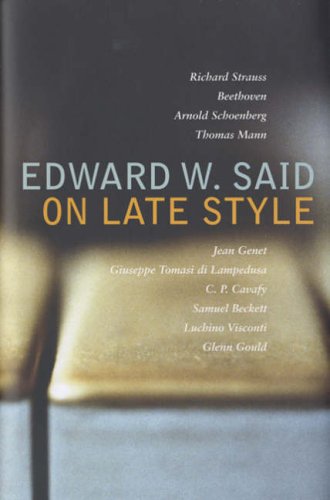
Edward W. Said
On Late style
Bloomsbury, 2006, 809 SAI


"Each of us can readily supply evidence of how it is that late works crown a lifetime of achievement. Rembrandt and Matisse, Back and Wagner. But what of artistic lateness not as harmony and resolution but as intransigence, difficulty and unresolved contradiction?"

Published posthumously, On Late style is Edward Said's last book of literary criticism, and appropriately examines works created at the end of the lives of many artists across a myriad of genres, including Beethoven, Jean Genet and Glenn Gould. It illuminates the ways in which these works differed from the artists' previous works in an attempt to explore what they tell us about the creative evolution throughout the life of an artist.

Other RSA Library items by or featuring Edward W. Said include...

Parallels and paradoxes: explorations in music and society
Bloomsbury, 2003, 780 BAR

The End of the peace process: Oslo and after
Granta Books, 2002, 956.05 SAI

Reflections on exile and other literary and cultural essays
Granta Books, 2000, 814.54 SAI

Blaming the victims: spurious scholarship and the Palestinian question
Verso, 1998, 956.940 SAI

Culture and imperialism
Vintage, 1995, 306.2 SAI

Edward Said: the last interview - extended version (DVD)
ICA Projects, 2004, DVD DIB

Thursday, May 11, 2006

New Books - Oak / The secret life of trees

ColinTudge
The secret life of trees
Allen Lane, 2005, 582.16 TUD

William Bryant Logan
Oak: the frame of civilization
W. W. Norton, 2005, 634.972 LOG


The oak tree is found throughout the temperate zones of the world; knowing how to use it has made an astonishing difference to human history. Acorn-eating has sustained humans and animals; oak has been central to religious rites, heating, homemaking and travel by land and sea; the ink from oak galls advanced the written word; oak casks have made possible food and drink storage and transport; oak ships have fought the dramatic naval battles that determined political and economic history. In a lively literary prose typical of this playwrite, William Briant Logan combines science, philosophy, spirituality and history in his biography of this essential tree that has been integral to the path of human civilization, and since time immemorial has been a symbol of loyalty and strength, generosity and renewal. Read a review of Oak at Guardian Unlimeted. Oak is related to the RSA project: RSA 250th anniversary tree planting project.

The age of trees often inspires awe, from the redwoods of California to English oaks. We wonder how they live so long, and how they really work. After all, trees provide us with air to breathe, fruits to eat, and wood to build with - and they do the same for thousands of creatures and plants. In The Secret Life of Trees, Colin Tudge explores the way trees work and what they are, finding out how they communicate, how they tell the time, how they came to exist, and much much more. Strange and surprising, this witty and informative book will make everyone fall in love with the trees around them. A respected science journalist, Colin Tudge has writen for all the major British science magazines and newspapers. Read his article of May 2004 in The Guardian newspaper on GM crops and worls agriculture. The Secret life of trees is related to the RSA project: RSA 250th anniversary tree planting project

Report & Download - Urban Task Force

In 1998 Richard Rogers was invited to chair a Government Task Force charged with translating sustainable urban development principles into strategic advice for planning authorities in England.

The Urban Task Force was faced with 3 specific urban challenges:

  • decline of regional inner-city areas and communities.
  • an official prediction of a requirement for 4 million additional households.
  • suburban sprawl consuming greenfield sites at an alarming rate, causing social and economic decline within inner-city areas.

The mission statement of the Urban Task Force was 'To identify causes of urban decline, to recommend solutions that will bring people back into our cities and to establish a vision for urban regeneration based on the principles of:

  • design excellence.
  • social well-being.
  • environmental responsibility.
  • within a viable economic and legislative framework.'

The result, published in 1999 and making over 100 recommendations, was the report 'Towards an Urban Renaissance: the final report of the Urban Task Force'. The executive summary of this report is available to download.

Six years on, the Urban Task force has come together again to write the report 'Towards a Strong Urban Renaissance'. Published in November 2005 its aim is to stimulate further public debate, encourage new thinking and build on the significant action prompted by the original report.

The work of the Urban Task force is relevant to the RSA projects: RSA Inclusive Design Resource and RSA Commission on Illegal Drugs, Communities and Public Policy, within the RSA Manifesto challenge : Fostering Resilient Communities.

Wednesday, May 03, 2006

New Book - Alternatives to prison

Anthony Bottoms, Sue Rex & Gwen Robinson (ed.)
Alternatives to prison: options for an insecure society
Willan Publishing, 2004, 364.680 ALT


Compiling research from a variety of experts conducting research throughout the UK, Alternatives to prison provides a valuable contribution to the search for alternative approaches to punishment and dealing with offenders. It provides a comprehensive and wide-ranging review of the range of issues associated with using the variety of non-custodial sanctions, such as the idea of punishment as communication, electronic monitoring and the community supervision of offenders, and sentencing management.

Including a chapter on dealing with substance-misusing offenders within the community, Alternatives to prison is of relevance to the RSA Commission on Illegal Drugs, Communities and Public Policy.

The RSA is just one organization within a significant movement dealing with public policy including issues of crime & punishment such as prisons. These range from activist groups such as No More Prison, to think tanks such as Rethinking Crime & Punishment who have a number of reports available to download, and academic institutions such as the International Centre for Prison Studies at King's College London.

Tuesday, April 25, 2006

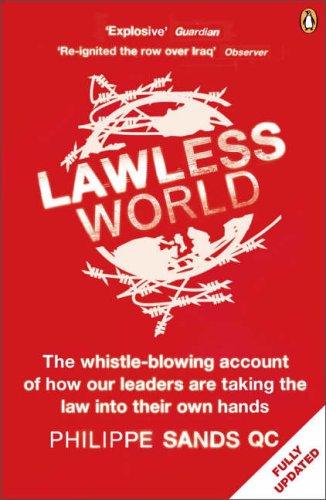
New Book - Lawless world

Philippe Sands
Lawless world: the whistle-blowing account of how Bush and Blair are taking the law into their own hands
Penguin Books, 2006, 327.41 SAN


International lawyer Philippe Sands presents a fascinating exposé of how the US and UK governments are riding roughshod over international agreements on human rights, war, torture and the environment - the very laws they put in place. The original publication of Lawless world changed the political agenda overnight, and forcing Tony Blair to publish damning material that he'd tried to hide, and prompting renewed media coverage of the justification for the war in Iraq. Now, in this updated edition the author looks at why global rules matter for all of us, and why it is so vital that we act now in order to preserve them.

Read a Guardian Unlimited review of Lawless world.

New Book - Designers are wankers / How to be a graphic designer...

Lee McCormack
Designers are wankers
About Face Publishing, 2005, 702.3 MAC

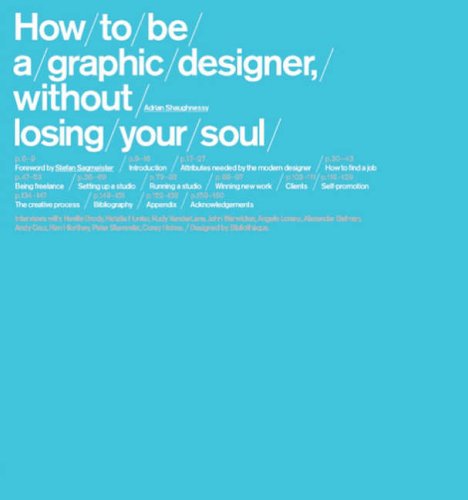
Adrian Shaughnessy
How to be a graphic designer, without losing your soul
Laurence King, 2005, 741.602 SHA


In Designers are wankers, Lee McCormack, designer of "Oculas" explores how creative graduates can make the leap from education into employment within the field of design. Including interviews with influential names in the field of design such as typographer Neville Brody and fashion entrepreneur Paul Smith, Designers are wankers is a valuable guide for anyone embarking on, or developing a career in design, despite it's attention grabbing title!.

Aimed at the independent-minded, How to be a graphic designer without losing your soul is another useful handbook addressing the concerns of young designers who want to earn a living by doing expressive and meaningful work but want to avoid becoming a hired drone working on soulless projects. It includes interviews with 10 leading designers, such as Natalie Hunter co-founder of Airside, John Warwicker of Tomato, and Angela Lorenz.

New Book - The Legalization of drugs

Douglas N. Husak & Peter De Marneffe
The Legalization of drugs
Cambridge University Press, 2006, 364.177


In The Legalization of drugs two prominent law philosophers present different sides of the debate over the legalization of drugs. Douglas Husak argues in favor of drug decriminalization, by clarifying the meaning of crucial terms, such as legalize, decriminalize, and drugs; and by identifying the standards by which alternative drug policies should be assessed. He critically examines the reasons typically offered in favor of our current approach and explains why decriminalization is preferable. Peter de Marneffe argues against drug legalization, demonstrating why drug prohibition, especially the prohibition of heroin, is necessary to protect young people from self-destructive drug use. If the empirical assumptions of this argument are sound, he reasons, drug prohibition is perfectly compatible with our rights to liberty.

An excerpt from The Legalization of drugs outlining Douglas Husak's argument, as well as the introduction and first chapter of his earlier book Drugs and Rights are available on-line.

The Legalization of drugs is a resource for the RSA project: RSA Commission on Illegal Drugs, Communities and Public Policy.

New Book - Planet of slums

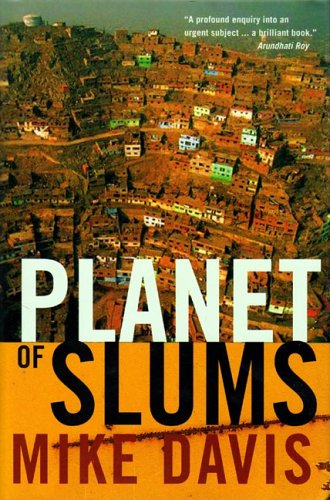
Mike Davis
Planet of slums
Verso, 2006, 307.76 DAV


Planet of slums charts the expected global urbanization explosion over the next thirty years and points out that outside China most of the rest of the world's urban growth will be without industrialization or development, rather a 'perverse' urban boom in spite of stagnant or negative urban economic growth. With a third of the global urban population living in Dickensian slums, at least half under the age of twenty, Mike Davis explores the threat of disease, of forced settlement on hazardous terrains, and of state violence, on a huge amount of the world population. A taste of Davis' extensive investigation into urban poverty can be found in his article for Orion magazine, entitled Slum Ecology.

New Book - Among the dead cities

A. C. Grayling
Among the dead cities: was the Allied bombing of civilians in WWII a necessity or a crime?
Bloomsbury, 2006, 940.53 GRA


In the course of WWII, the air forces of Britain and the United States of America carried out a massive bombing offensive against the cities of Germany and Japan, ending with the destruction of Hamburg and Dresden, Tokyo, Hiroshima and Nagasaki. A. C. Graying investigates whether it was justified by the necessities of war. Or was it, in fact, a crime against humanity? Beyond an investigation into a specific aspect of Second World War history, Among the dead cities poses a highly relevant question of morality within warfare in general. A.C. Grayling's March 2006 article on the role of bombing in the war in Iraq in The Guardian Unlimited provides a thoroughly modern context for his observations and argument, while an interview with The Independent newspaper explains exactly why this cultural philosopher has turned his attention to the Allied bombings of Germany & Japan.

New Book - The Great Transformation

Karen Armstrong
The Great transformation: the world in the time of Buddha, Socrates, Confucius and Jeremiah Atlantic, 2006, 930.16 ARM


The centuries between 800 and 300 BC saw an explosion of new religious concepts. But why did Socrates, Buddha, Confucius, Jeremiah, Lao Tzu and others all emerge in this specific five-hundred-year span? In The Great transformation, Karen Armstrong examines this period and the connections between this seemingly disparate group of philosophers, mystics, and theologians.

Useful reviews of The great Transformation can be found at The Independent Online and The Borzoi reader online.

Monday, April 24, 2006

New Book - Offshore

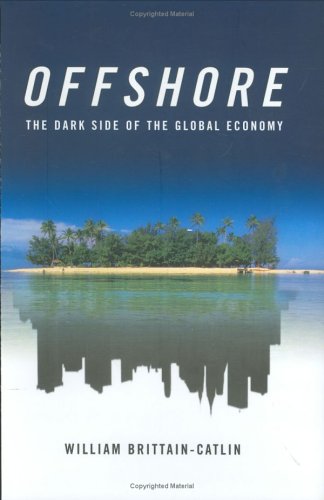
William Brittain-Catlin
Offshore: the dark side of the global economy
Farrar, Straus and Giroux, 2005, 330.972 BRI


A revealing and chilling exposé on the hidden side of global wealth and power, Offshore is an unprecedented exploration of what can be seen as a mysterious aspect of global society today. BBC producer and corporate investigator William Brittain-Catlin tells the story of how tax havens have become central to global finance and takes us into the secret network of oganisations such as Parmalat- the company known as Europe's Enron- and behind international trade disputes, and into organized crime and terror networks. He argues that through offshore practices the key value of capitalism and civilization alike-freedom-is being put in grave danger.

Offshore is a lecture resource for the forthcoming RSA Lecture "Who's afraid of the New Europe? How off-shoring and tax competition will change the future" on Wednesday 17 May 2006, which is being held in association with leading offshore law firm Appleby Spurling Hunter, which provides a different take on the subject. Further information can be found at the Financial Services Authority and in this Open Democracy article - The Offshore world.

Sam Hinton-Smith
The Offshore world http://www.opendemocracy.net/globalization-vision_reflections/offshore_3375.jsp

Friday, April 21, 2006

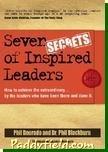
New Book - Seven secrets of inspired leaders

Phil Dourado & Phil Blackburn
Seven secrets of inspired leaders: how to achieve extraordinary results by the leaders who are doing it
Capstone, 2005, 658.409 DOU


In Seven secrets of inspired leaders, extraordinary leaders share innovative ideas for achieving extraordinary results in the face of dramatic change, and illustrate how traditional forms of leadership are becoming obsolete. Phil Blackburn-co-founder of the Inspired Leaders Network-and business writer Phil Dourado distill the insights of top business leaders on the most advanced strategies for responding to today's leadership challenges.

LeaderValues is a free online leadership resource centre.

New Books - Seeing what's next / The Innovator's solution

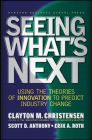
Clayton M Christensen & Scott D. Anthony
Seeing what's next: using the theories of innovation to predict industry change
Harvard Business School, 2004, 658.403 CHR

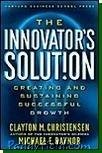
Clayton M Christensen & Michael E. Raynor
The Innovator's solution: creating and sustaining successful growth
Harvard Business School, 2003, 658.406 CHR


Clayton M Christensen is a Harvard Business School professor and leading expert in the field of technical innovation within business.

Seeing what's next offers a three-part model designed to help decision makers spot the signals of industry change, determine the outcome of competitive battles, and assess whether a firm's strategic choices ensure or threaten its future success. This hugely valuable work uses case studies from various industries including aviation and health care and is supplemented with diagnostics and tools.

Challenging the often very predictable process by which innovations are packaged and shaped within companies, The innovator's solution opens the black box of innovation to reveal the critical forces that impact the shaping of innovations within any organization, from inception to launch . It also offers practical guidance for the management of these so called 'disruptive technologies'. The innovator's solution is a resource for the forth coming RSA lecture "Using Disruptive innovation to drive growth and change" on Thursday 15 June 2006.

New Book - The Challenge of affluence

Avner Offer
The Challenge of affluence: self-control and well-being in the United States and Britain since 1950
Oxford University Press, 2006, 306.309 OFF


Using comparative studies of US and British market consumption and drawing on extensive cognitive and social research, The Challenge of affluence provides a reasoned critique of modern consumer culture within western societies, especially confronting the assumption that freedom of choice necessarily maximizes individual and social well-being. The Challenge of affluence is one of the RSA Library 'Books of the month' for April 2006, a good synopsis is also provided by an Economic History Society review .

Thursday, April 20, 2006

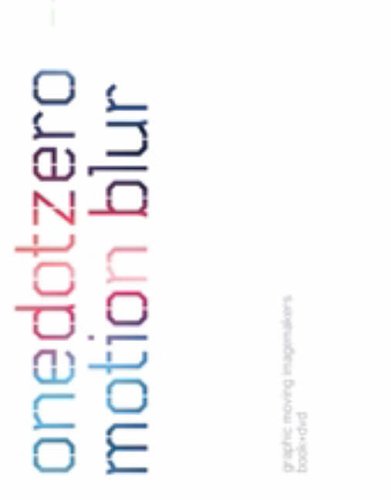
New Books - Motion blur / Two minds

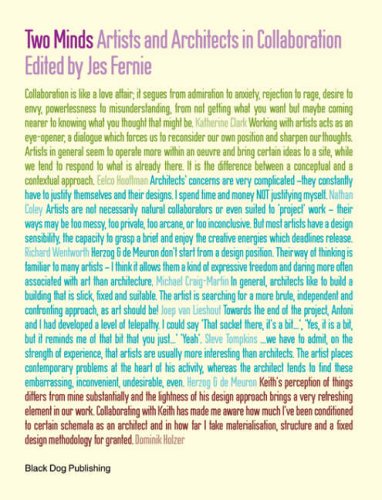
Jes Fernie
Two minds: artists and architects in collaboration
Black Dog Publishing, 2006, 709.04 TWO

Shane Walter R. J. & Matt Hanson
Motion blur: onedotzero - graphic moving image makers
Laurence King, 2005, 778.53 WAL


Two minds explores and critiques the subject of collaboration between artists and architects. Interest and activity in this field is growing rapidly, making this book a timely consideration of an important phenomenon. Extensively illustrated, the book documents 18 projects funded through the RSA Art for Architecture scheme and focuses on work by internationally renowned figures such as Mark Dion, Chris Ofili, David Adjaye and Herzog & de Meuron, alongside that of emerging practitioners. Two minds is the subject of an article in Aprils RSA e-journal.

With a focus on graphic design and digitally-manipulated film, Motion blur profiles and investigates the work of 28 cross-media artists from around the world. As well as screen grabs, it uses interviews, photography, storyboards and sketches to explore the work and reveal the creative processes behind it. An accompanying DVD features the work of those discussed.

New Book - What we believe but cannot prove

John Brockman
What we believe but cannot prove: science in the age of certainty
Free Press, 2005, 502 BRO


John Brockman, of the intellectual forum Edge Foundation, Inc. brings together answers to the question "What do you believe is true even though you cannot prove it?” from some of the worlds most eminent scientist and academics. From the future of computing to the origins of intelligence, respectedintellectualss from a variety ofdiscipliness bring together their most personal ideas about the subjects they care mostpassionatelyy about. Spanning a wide range of scientificendeavorsr and human experience in subject and questioningintellectuall principals as far reaching as the nature of "proof", this collection is an insight into the instinctive beliefs of some of today's most brilliant minds as well as an invitation to answer the question yourself.

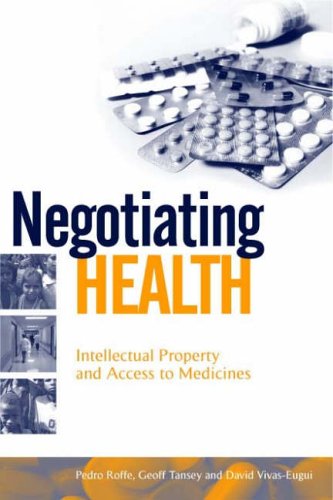
New Book - Negotiating health

Pedro Roffe (ed.)
Negotiating health: intellectual property and access to medicines
Earthscan, 2005, 362.1 ROF


Published by Earthscan, Negotiating health is an analysis on the post-2005 world of pharmaceuticals, and a discussion of how action may be taken to ensure that access to medicines is not sacrificed to corporate attempts to protect business interests. This book contributes greatly to the debate over health in developing countries and comes at a time when significant questions are being asked of WTO policy and regulations in terms of allowing the poorest nations access to affordable medicines, for the treatment of diseases such as AIDS and malaria.

Negotiating health is related to the RSA project - Adelphi Charter .

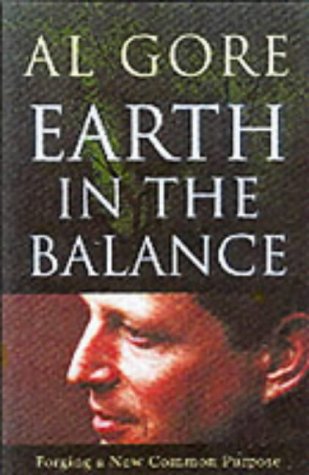
New Book - Earth in the balance

Al Gore
Earth in the balance: forging a new common purpose
Earthscan, 2000, 333.7 GOR


Earth in the balance is an analysis of the most crucial and far-reaching issues confronting humanity by former US presidential candidate Al Gore. A former journalist, Gore won a seat in the House of Representatives in 1976, has represented Tennessee in the Senate and been Vice-President. Throughout his career he has been a powerful political voice for the preservation of the environment.

Al Gore will present an RSA lecture on Wednesday 21st June 2006.

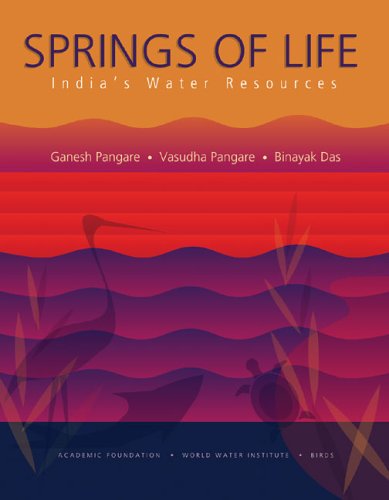
New Books - When the rivers run dry / Springs of life

Fred Pearce
When the rivers run dry: what happens when our water runs out?
Eden Project, 2006, 333.91 PEA

Ganesh Pangare & Vasudha Pangare
Springs of life: India's water resources
Academic Foundation, 2005, 363.61 PAN


When the rivers run dry and Spring of life are books examining different aspects of water usage and shortages, and are both related to the RSA project Engaging Enterprise in Water and Environmental Sanitation Development.

The South East of Britain has less water per capita than the Sudan or Ethiopia, and while there is less and less rain, our demand grows. Although our water crisis is relatively tranquil, it is repeated - often in vastly more dangerous form - across the world, making the current situation a world-wide water crisis. Fred Pearce's 15-year research into water issues has taken him all over the world, and in that time his vivid reporting has revealed the personal stories behind failing rivers, barren fields, decertification, floods, and water wars. When the rivers run dry takes a global perspective, giving a clear and terrifying picture of the consequences, if no remedial action is taken. However it is also a brilliantly challenging explanation of the steps we must take to ensure the 'blue revolution' the entire world desperately needs. Fred Pearce outlines the argument of his book with an article in The Guardian newspaper from March 2006.

Written by leading researchers in water related issues, Springs of life presents an indepth and valuable account of the availability and uses of water in India. As well as exploring and evaluating common sense solutions to local water problems that many Indian communities have adopted, it also documents the natural beauty of the water bodies, and the ways in which communities live and interact with water, particularly in hostile ecosystems.

New Book - After the neocons

Francis Fukuyama
After the neocons: where the right went wrong
Profile, 2006, 327.73 FUK


Attacking the right-wing policymakers he has previously associated with, influential political theorist Francis Fukuyama argues that the Bush administration, in the war in Iraq, has wrongly applied the principles of neo-conservatism. He provides an approach which emphasizes the importance of creating multiple international institutions, and of solving the problem of development policy which he believes needs to be directed not only at strengthening economies, but also at building up the state institutions that are necessary for stable economic growth to take place and for democracies to take root in the long term.

A summarizing extract of After the neocons can be read at The Times website, while The Observer and New Statesman both provide reviews.

Wednesday, April 19, 2006

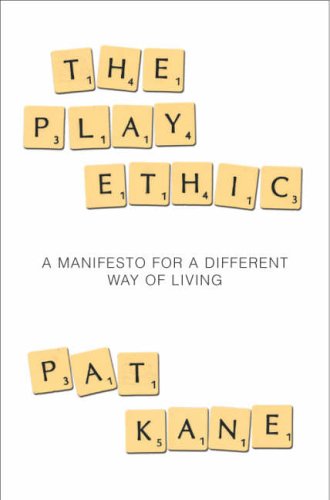
New Book - The Play ethic

Patrick Kane
The Play ethic: a manifesto for a different way of living
Pan Books, 2005, 306 KAN


At the forefront of what has become known as the 'Re-imagining Social Work Project', Patrick Kane is a director of the creative consultancy New Integrity. Arguing the play is a vitally missing component of modern society’s work ethic, Kane puts forward his manifesto for a different approach to work in this eye-opening book. Shocking, controversial, yet magnificently argued, The Play Ethic is a book no one who works, or has ever worked, can afford to be without.

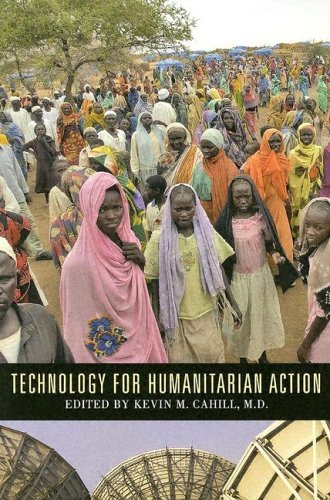
New Book - Technology for humanitarian action

Kevin M Cahill (ed.)
Technology for humanitarian action
Fordham University Press, 2004, 303.483 CAH


Published through the Institute of International Humanitarian Affairs an Fordham University, Technology for humanitarian action is a practical guide to current technologies that can help relief and humanitarian aid workers. Designed to facilitate technology transfer to the humanitarian sector, the essays focus on areas where technology is underused and attempt to predict where new technological advances may be applied. This valuable peace of research illustrates ways in which humanitarian organizations could incorporate technological advances into their humanitarian action program's in order to maximize the impact of humanitarian aid.

In 2005, UNICEF published its latest Humanitarian Action Report.

Further information on advances and uses of medical technology can be found through the Department of Essential Health Technologies, a branch of the World Health organization.

New Books - The End of faith / Dawkins' God

Sam Harris
The End of faith: religion, terror, and the future of reason
Free Press, 2006, 200 HAR

Alister E. McGrath
Dawkins' God: genes, memes, and the meaning of life
Blackwell, 2004, 261.55 MAC


The role of religion is an issue of increasing social and political significance in modern society and has been the subject of renewed debate due to contributions from a number of recent books, films and television programs. From the 'Living as a Muslim' episode of Morgan Spurlock's 30 Days series, to Richard Dawkins' own two-part Channel 4 investigation Can you believe it?, and the recent documentary feature film The God who wasn't there, religion is controversially yet unquestionably under the media spotlight.

Sam Harris' The End of faith and Alister McGrath's Dawkins' God are two books attempting to tackle the intellectual foundations of the debate from vastly opposing view points. McGrath, who featured in an RSA lecture in March 2006 debating Daniel Dennett and the ideas put forward in his book Breaking the spell: religion as a natural phenomenon, seeks to defend religion by providing the first book-length response to Richard Dawkin's influential attempt to explain religion by scientific means. Combining scientific analysis and theology, McGrath is particularly convincing is his attack Dawkins' theory of memes.

Sam Harris by contrast provides a more sociological analysis of the effect of religion on modern society and what he considers to be the great conflict between faith and reason. He highlights mankind's willingness to suspend reason in favor of religious beliefs, seeking to explain this human tendency even when those beliefs are often used to justify harmful behavior and sometimes heinous crimes.

Tuesday, April 18, 2006

New Books - The Wal-Mart Effect / Wal-Mart

Charles Fishman
The Wal-Mart effect: how the world's most powerful company is transforming the rules of the American economy
Penguin Press, 2006, 381.149 FIS

Greg Spotts
Wal-Mart: the high cost of low price
The Disinformation Company, 2006, 381.149 SPO


Wal-Mart is not only the world's largest company; it is also the largest company in the history of the world. Americans spend $26 million every hour at Wal-Mart, twenty-four hours a day, 365 days a year. As such, Wal-Mart is at the forefront of the ever powerful advance of corporate, mass retailing. Whether viewed as a revolutionary organization providing affordable products to millions of America's lower-income families, or a power hungry corporation putting profits firmly in front of people, the role of organizations such as Wal-Mart within capitalist societies is an issues of great significance us all. Contributing to a debate that has received significant international media coverage (including a nationally broadcast television report from the acclaimed American public broadcasting network PBS) these equally engaging books present the giant company in two very different lights.

In The Wal-Mart effect: how the world's most powerful company is transforming the rules of the American economy, award-winning journalist Charles Fishman breaks through the wall of secrecy to reveal the many astonishing ways Wal-Mart's power affects our lives and reaches all around the world, providing a much needed insight into the impact of this monster company on retailers and manufacturers, wages and jobs, the culture of shopping, the shape of our communities, and the environment.

Wal-Mart: the high cost of low price is a fast-paced, insider book accompanied the recent documentary film Wal-Mart, that takes us behind the scenes of a powerful new coalition of voices that is seeking to challenge Wal-Mart and speak out about the threat to our way of life that they believe this retailing giant represents. As part of this grassroots movement a network of websites, such as WalMartWatch and WakeUpWalMart, have been set up to support the nationwide campaign to reveal the allegedly harmful impact of Wal-Mart.

Thursday, April 13, 2006

New Book - Bait and Switch

Barbara Ehrenreich
Bait and switch: the futile pursuit of the corporate dream
Granta Books, 2006, 305.554 EHR


Intrigued by reports of poverty and despair within America's white-collar corporate workforce, influential journalist Barbara Ehrenreich decided to infiltrate their world as an undercover reporter, and learn about the problems facing middle-class executives. Her story is at times funny, yet also delivers a severe warning about the future that faces corporate employees everywhere.

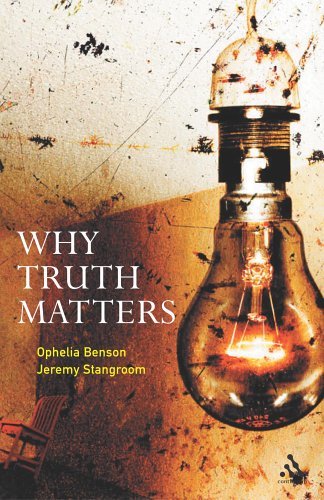
New Book - Why Truth Matters

Ophelia Benson & Jeremy Stangroom
Why truth matters
Continuum, 2006, 121 BEN


Truth has always been a central preoccupation of philosophy in all its forms and traditions. An inspiring argument for restoring truth to its rightful place, Why truth matters takes a look at how and why modern thought and culture lost sight of the importance of truth.

Wednesday, April 12, 2006

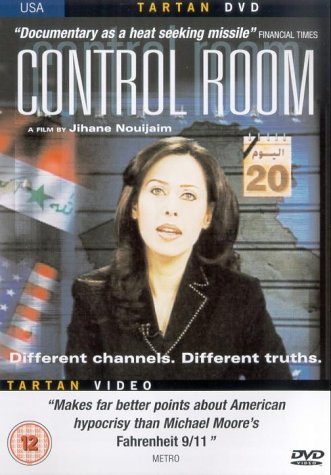
New DVD - Control Room

Jehane Noujaim
Control Room: different channels. different truths.
Tartan Video, 2004, DVD NOU


Arab-American filmmaker Jehane Noujaim asks whether America is radicalizing or stabilizing the Arab world by examining and contrasting the presentations of the recent war in Iraq by Arab and American satellite television news media. Suggesting that Al Jazeeras, the Arab news network branded by the Bush administration as "Osama Bin-Laden's mouthpiece" may actually be more in tune with democratic ideals than its American counterparts, Noujaim reminds us that truth is gathered, presented and ultimately created by those who deliver it. For more information and to view a trailer, visit the Control Room website.

New DVD - The Corporation

The Corporation
Big Picture Media Corporation, 2005, DVD ACH


Corporations are the dominant institution of our time. One of the reasons such organizations have become so powerful, is because in the mid-1800s they were given the legal status of a "person", in order to encourage economic growth. In this hard-hitting documentary, a successful film-making team follow the legal status of a corporation as a "person" to its logical conclusion, suggesting that an individual who acted in the manor of a corporation would be medically diagnosed as a "psychopath" - a callous, deceitful, self obsessed person who feels no trace of guild at his own inherently amoral actions. Provoking, witty and sweepingly informative, The Corporation includes forty interviews with corporate insiders and critics – including Milton Friedman, Noam Chomsky, Naomi Klein and Michael Moore. For more information and to view atrailerr, visit The Corporation website.

New Book - Peer-to-peer

Andrew Oram
Peer-to-peer: harnessing the benefits of disruptive technologies
O'Reilly, 2001, 004.68 ORA


The term "peer-to-peer" has come to be applied to networks that expect end users to contribute their own files, computing time, or other resources to some shared project. Even more interesting than the technical underpinnings of peer-to-peer systems, are their socially disruptive potential: the various ways they can return content, choice, and control to ordinary users. Presenting the goals that drive the developers of the best-known peer-to-peer systems, Andrew Oram explores the problems they've faced, and the technical solutions they've found. An RSA lecture on disruptive technology will take place on Thursday 15 June 2006, entitled: "Using Disruptive innovation to drive growth and change" .

Wednesday, March 22, 2006

New Book & DVD - The Yes Men

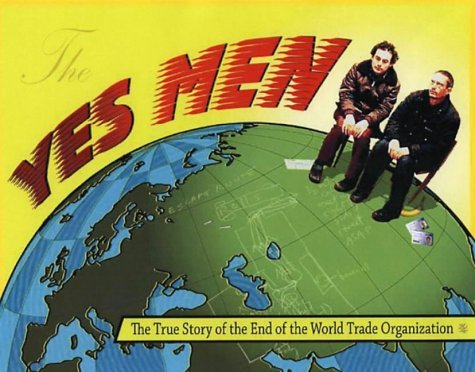
The Yes men: the true story of the end of the World Trade Organisation
The Disinformation Company, 2004, 791.437 BIC / DVD SMI


This award winning doccumentary film and acompanying book is the story of two board, middle-class American activists who set up a fake World Trade Organisation website with a subtly subversive content. Much to their surprise, it fools enough people to get them invited by various organisations to give lectures on behalf of the WTO. Naturally they jump at the oppotunity, and the film goes on to chart the hilarious but equally frightening progress of these lectures, and the staggering lengths these activists have to go to in order to expose their own prank. For more infomation, and to view the trailer, visit the The Yes Men movie. Or Why not join this new generation of activism and become a Yes Man/Woman now!

Wednesday, March 15, 2006

RSA Education

Lesley James, head of RSA education, appears on BBC Radio 4’s The Learning Curve 14 March edition - with a feature and discussion about the RSA curriculum and its impact on schools such as St. John’s in Wiltshire who have been successfully running Opening Minds for 5 years.

The show will be repeated on Sunday 19 March between 23:00 - 23:30 (92-95FM), or you can listen online.

Opening minds materials in the RSA Library:
Opening minds: giving young people a better chance. 2005
Opening minds: curriculum materials CD-ROM. 2003
Valerie Bayliss. Opening minds: taking stock. 2003
Opening minds: project handbook. 2003
Opening minds: project update. 2002.
Valerie Bayliss. Opening minds: education for the 21st century. 1999

Available to borrow by RSA Fellows - contact the Library for details. Ask about our Freepost service.

Tuesday, March 14, 2006

Is Google book search "Fair Use"?

Lawrence Lessig on Google Book Search and copyright......

Wednesday, March 08, 2006

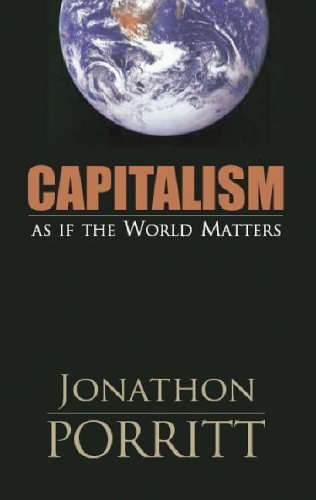
New Book - Capitalism: as if the world matters

Jonathon Porritt
Capitalism: as if the world matters
Earthscan, 2005, 330.122 POR


This timely book tackles the pressing problem of how capitalism, and business, can provide a future of wealth and equity, yet symultaniously ensure ecological integrity. Porritt lays out the framework for a 'sustainable capitalism' that would cut across the political divide to achieve a more prosperous future for both our planet and its inhabitants.

Available to borrow by RSA Fellows - contact the Library for details. Ask about our Freepost service.

New Book - Talk to the hand

Lynne Truss
Talk to the hand: the utter bloody rudeness of everyday life, or, six good reasons to stay at home and bolt the door
Profile, 2005, 395 TRU


In the follow up to her celebrated book Eats, Shoots & Leaves, the queen of zero tolerance now lends her outspoken and highly entertaining style to an assault on the sorry state of modern manners.

Available to borrow by RSA Fellows - contact the Library for details. Ask about our Freepost service.

Tuesday, March 07, 2006

New Book - State of the world 2005

WORLDWATCH INSTITUTE & Michael Renner
State of the world 2005: a Worldwatch Institute report on progress toward a sustainable society
Earthscan, 2005, 333.72 STA


Worldwatch takes a new look at the theme that has dominated international politics since 9/11: security. Focussing not the armed conflicts but the underlying social, economic and environmental pressures which determine how threatened and vulnerable people feel, State of the world 2005 seeks to understand the social and political significance of food, water, natural resources, environmental and health threats as thr key global issues of today. State of the World is a resource relied upon by national governments, UN agencies, development workers and law-makers for its authoritative and up-to-the-minute analysis and information. It is valuable for anyone concerned with building a positive, global future.

Available to borrow by RSA Fellows - contact the Library for details. Ask about our Freepost service.

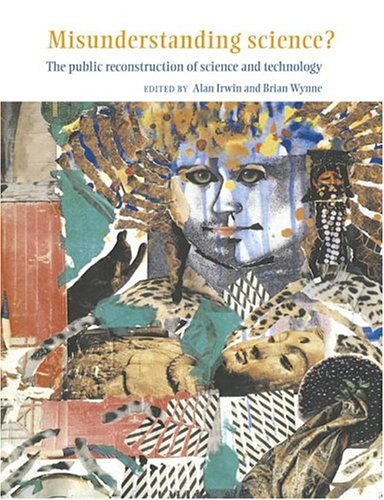
New Book - Misunderstanding science?

Alan Irwin (ed.)
Misunderstanding science?: the public reconstruction of science and technology
Cambridge University Press, 2004, 306.45 MIS


Misunderstanding science offers a challenging perspective on the nature of modern science and its relationship with the public. It provides a comprehensive analysis of the current concerns over the uptake, authority, and effectiveness of science as expressed, for example, in areas such as education, medical/health practice, risk, the environment and technological innovation. Informed theoretically by the sociology of scientific knowledge, the book draws some far reaching conclusions and makes some important suggestions about the future of the relationship between science and the public. For example, it suggests that many of the inadequacies in the social integration and uptake of science might be overcome if modern scientific institutions were more reflexive and open about the implicit normative commitments embedded in scientific cultures.


Available to borrow by RSA Fellows - contact the Library for details. Ask about our Freepost service.

New Book - The Culture of the new capitalism

Richard Sennett
The Culture of the new capitalism
Yale University Press, 2006, 306.36 SEN


Distinguished MIT sociologist Richard Sennett surveys the major differences between earlier forms of industrial capitalism and the more global version that is evident today. Sennett illustrates how our work ethic is changing, how new beliefs about merit and talent are displacing old values of craftsmanship and achievement, and how the boundary between consumption and politics is steadily diminishing.

Available to borrow by RSA Fellows - contact the Library for details. Ask about our Freepost service.

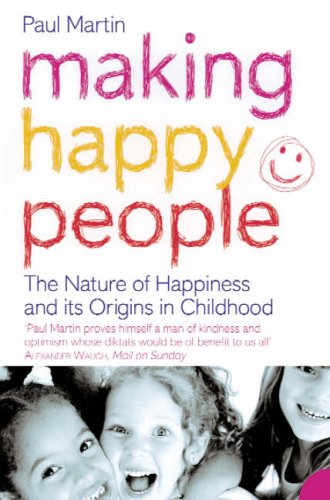
New Book - Making happy people

Paul Martin
Making happy people: the nature of happiness and its origins in childhood
Harper Perennial, 2006, 152.42 MAR


From the author of the highly successful Counting Sheep comes a new book on the study of happiness. Looking at the origins of happiness within the individual during the lifelong process of development from birth to death, Making happy people also explores the relationship between happiness and success, and the ways in which early experience, parents and education influence each individual's capacity for happiness, the most sought-after and most elusive human property.

Available to borrow by RSA Fellows - contact the Library for details. Ask about our Freepost service.

Monday, March 06, 2006

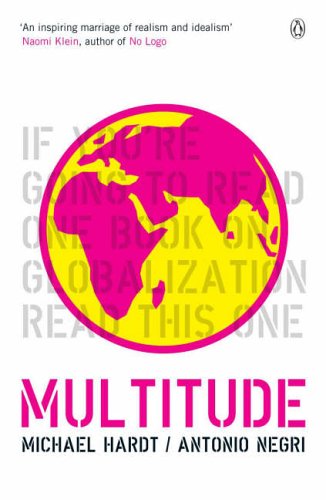
New Book - Multitude

Michael Hardt & Antonio Negri
Multitude: war and democracy in the age of empire

Penguin, 2006, 321.8 HAR


In their previous book Empire, Michael Hardt & Antonio Negri argued that modern globalization has created a new social and political order that constitutes a new form of empire. By colonizing and interconnecting more areas of life ever more deeply, this empire has now created the possibility for a revolutionary kind of democracy. This is the thesis put forward by Hardt & Negri in their latest book Multitude, a work of socio-political idealism that is simultaneously grounded by a fierce intellectuality, creating a powerful vision of a truly democratic future that seems genuinely achievable. Multitude is a book of great significance among left wing scholarship, and consolidates the stature of its authors as two of the world's most important political philosophers.

Available to borrow by RSA Fellows - contact the Library for details. Ask about our Freepost service.

New Book - The Atlas of water

Robin Clarke & Jannet King
The atlas of water: mapping the world's most critical resource
Earthscan, 2004, 333.91 CLA


An in depth analysis of the changing relationship between the people of the world and their most valuable resource, The Atlas of water provides an overview of our water consumptionon a global scale, as well as highlighting the scarcity and quality of water in vulnerable regions such as California, the Middle East and India. This colour guide contains both the most up to date statistical information regarding our uses of water and a valuable discussion of the political and social issues surrounding this most vital topic.

Available to borrow by RSA Fellows - contact the Library for details. Ask about our Freepost service.

New Stonewall report - download

Tuned Out - the BBC's portrayal of lesbian and gay people
Stonewall has carried out research into how the BBC represents lesbian and gay lives.

Does TV have a positive or negative impact?
Does the BBC challenge homophobia?
Do gay licence-payers get value for money?

download the report here

Friday, March 03, 2006

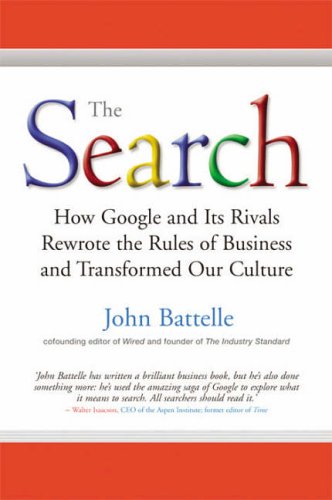
New Book - The Search

John Battelle
The Search: how Google and its rivals rewrote the rules of business and transformed our culture
Nicholas Brealey, 2005, 025.04 BAT


John Battelle explains how the search industry is changing the way we live in profound and unpredictable ways. Focusing on the rise of Google, it includes exclusive interviews with some of the biggest names at the top companies, including Google founders, Larry Page and Sergey Brin.
John Battelle's blog.
Interesting post here about Battelle and Penguin's disagreement over Google Book Search.

Available to borrow by RSA Fellows - contact the Library for details. Ask about our Freepost service.

New Book - Avoiding dangerous climate change

Hans Joachim Schellnhuber (ed.)
Avoiding dangerous climate change
Cambridge University Press, 2006, 363.738 SCH


In 2005 the UK Government hosted the Avoiding Dangerous Climate Change Conference to take an in-depth look at the scientific issues associated with climate change. This volume is a result of this conference and presents the most recent findings from the leading international scientists that attended the conference, addressing topics such as critical thresholds and key vulnerabilities of the climate system, impacts on human and natural systems and technological options for meeting different stabilisation levels of greenhouse gases in the atmosphere.

Available to borrow by RSA Fellows - contact the Library for details. Ask about our Freepost service.

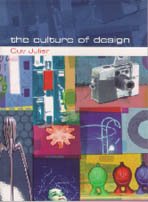
New Book - The Culture of design

Guy Julier
The Culture of design
SAGE Publications, 2000, 306.470 JUL


The Culture of design is an exploration into the far reaching influence of design on our lives. Combining a history of the development of design in recent years, with a discussion of the design process and the role of the consumer, Guy Julier writes with a strong understanding of the dialectical relationship that exists between the design industry and the society for which it designs. The Book strikes a useful balance between theoretical material and background information, while analyzing in detail the examples it uses - such as the issue of the convergence of design with advertising.

Available to borrow by RSA Fellows - contact the Library for details. Ask about our Freepost service.

New Book - Emotionally durable design

Jonathan Chapman
Emotionally durable design: objects, experiences & empathy
Earthscan, 2005, 658.575 CHA


Jonathan Chapman explores the essential question, why do users discard products that still work? He transports the reader beyond symptom-focused approaches to sustainable design such as recycling, biodegradability and disassembly, to address the actual causes that underpin the environmental crisis we face. Proposing the emergence of a new genre of sustainable design that reduces consumption and waste by increasing the durability of relationships established between users and products, Chapman seeks to find creative strategies that will enable designers from a range of disciplines to explore new ways of thinking and designing of objects capable of supporting deeper and more meaningful relationships with their users.

Available to borrow by RSA Fellows - contact the Library for details. Ask about our Freepost service.